
 EN
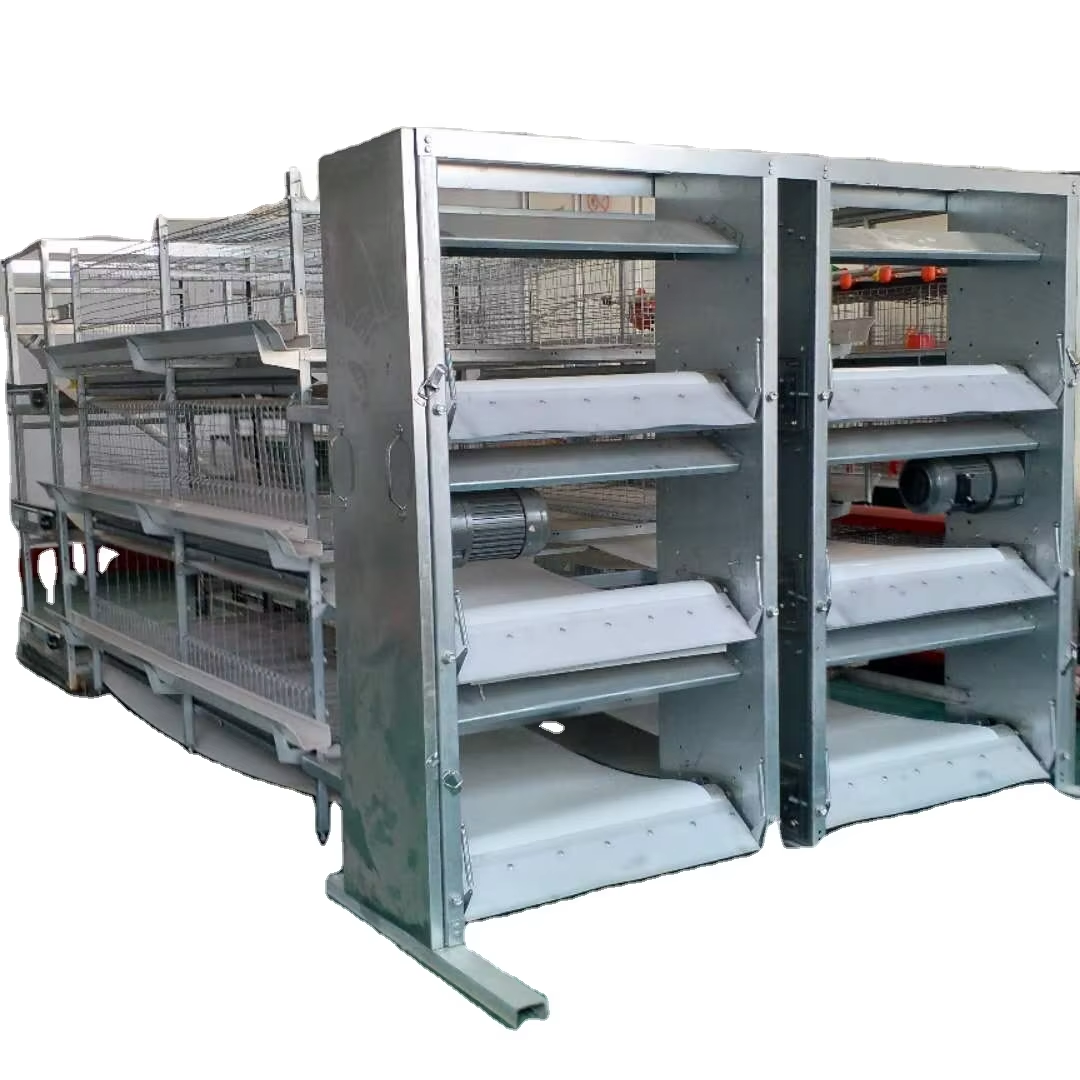
Understanding Farm Scale Tiers and Their Direct Impact on Poultry Cage Design
Farm scale directly dictates the optimal poultry cage configuration—affecting bird density, capital intensity, labour structure, and long‑term expansion potential. Matching the system to the number of birds prevents over‑investment in small operations and under‑capacity in large ones, while ensuring operational efficiency and welfare compliance.
Small‑Scale (1,000–20,000 birds): Prioritizing flexibility, low CAPEX, and manual operation
For flocks between 1,000 and 20,000 layers, the dominant choice is a manual A‑type poultry cage system. This configuration keeps initial capital expenditure low and supports organic, step‑by‑step growth. A 3‑ or 4‑tier manual A‑type cage reduces the floor area per 1,000 birds from approximately 140 m² in a deep‑litter system to about 42 m²—achieving a density of roughly 24 birds per square metre. Vertical stacking frees up valuable barn space and enables incremental expansion without major structural modifications. Feeding, egg collection, and manure removal rely on farm labour, making the model especially suitable where electricity is intermittent and labour is affordable. The modular frame design allows producers to add rows as market demand grows, converting early profits into semi‑automation later. This approach gives smallholders a low‑risk entry point to professional layer production, with the freedom to test the market and scale operations organically.
Medium‑Scale (20,000–150,000 birds): Balancing automation readiness with structural modularity
Medium‑scale farms need to reduce labour costs while preserving the ability to expand or upgrade. Here, A‑type cages with automated feeding belts and egg‑collection lines become common. A four‑tier automated A‑type system maintains 24–30 birds per square metre and cuts manual labour by up to 40 % compared with fully hand‑operated setups. The cage structure is often engineered as pre‑fabricated modular segments that allow later conversion to H‑type battery cages once flock numbers cross the 100,000 threshold. Designs increasingly incorporate droppings belts to separate waste from birds instantly—controlling ammonia and pathogen exposure, a critical biosecurity feature. Ventilation and cooling equipment are typically added in stages, aligning capital outlay with cash‑flow growth. This tier requires careful planning of structural load, power supply, and manure handling capacity so that the farm can transition smoothly to a fully automated high‑density system without discarding existing infrastructure.
Large‑Scale (150,000+ birds): Mandating H‑type battery cages, integrated automation, and regulatory alignment
When a poultry operation exceeds 150,000 birds, only H‑type battery cage systems deliver the density and efficiency necessary for industrial margins. With 5 to 8 vertical tiers, these cages achieve 30–50 birds per square metre and rely on full automation of feeding, drinking, egg collection, manure drying, and climate control. A well‑engineered H‑type system in a 540,000‑bird layer farm can sustain egg production rates of 96 % with minimal manual intervention. At this scale, regulatory compliance moves to the forefront: producers must meet local and export standards for enriched cages, ammonia emissions, and waste handling. For instance, EU welfare directives mandate certain perch space and nest box requirements, while African nations like Ghana or Nigeria may enforce simpler structural safety and biosecurity codes. Designing the poultry cage system thus becomes a multi‑disciplinary exercise that aligns cage geometry, automation level, and environmental controls with both production targets and the legal framework of the target market.
Selecting the Right Poultry Cage Configuration: H-Type vs A-Type by Scale and Objective
The choice between A-type and H-type poultry cage systems is a foundational decision that shapes space utilization, labor requirements, and overall production economics. A-type cages, with their slanted, step‑like profile, are commonly deployed in small‑ to medium‑scale farms where ease of installation and lower capital expenditure are critical. These setups typically accommodate manual or semi‑automatic feeding and egg collection, making them a practical fit for operations with limited electrical infrastructure. In contrast, H-type cages stack vertically in multiple tiers—frequently 4 to 8 levels—to dramatically increase bird density per square meter of floor space. This configuration is engineered for industrial‑scale facilities and integrates automated feeding, drinking, manure removal, and egg collection, which cuts labour per bird and stabilises production output.
A direct comparison of key operational parameters clarifies how each configuration aligns with different farm objectives:
| Cage Configuration | Typical Capacity per House (birds) | Recommended Scale (layers) | Automation Level | Building Width Requirement | Feed Distribution Time |
|---|---|---|---|---|---|
| 3-Tier A-Type | 8,000–12,000 | 5,000–10,000 | Semi-automatic | 8–10 meters | 25–35 minutes |
| 4-Tier A-Type | 15,000–20,000 | 10,000–30,000 | Semi or full automatic | 10–12 meters | 30–40 minutes |
| 4-Tier H-Type | 30,000–50,000 | 30,000–60,000 | Fully automatic | 13–15 meters | 12–18 minutes |
| 8-Tier H-Type | 80,000–120,000 | Above 60,000 | Intelligent automation | 15–18 meters | 15–20 minutes |
H‑type cages routinely achieve stocking densities of 18–22 birds per square meter—well above the levels typical of A‑type designs. This density advantage, combined with faster feed distribution and centralised egg handling, makes H‑type systems the standard for large‑scale commercial egg farms. However, they demand wider buildings, higher upfront investment, and a reliable power supply to support automation. A‑type poultry cages remain a viable option for medium‑scale producers who prioritise lower initial costs and the flexibility to expand incrementally. The final selection should therefore be driven by a clear assessment of both target bird capacity and the farm’s existing labour and infrastructure constraints.
Scaling Automation Strategically: Matching Control Systems to Bird Capacity and Labor Infrastructure
From manual feeding to AI-driven climate + egg collection: A tiered automation roadmap
Manual feeding remains common in small poultry cage operations but consumes significant labour—often over 250 weekly hours for large flocks. A phased path to automation unlocks efficiency. Farms with 10,000–20,000 birds benefit from semi‑automated feeders and drinkers, which a 2023 Animal Behaviour study linked to a 41% drop in food‑related stress markers. At 20,000–150,000 birds, integrating automated egg collection and climate sensors becomes viable. Fully automated poultry cage systems for 100,000+ birds slash labour from 280 hours per week to just 25, as documented in a 2024 operational cost report. Beyond labour savings, AI‑driven control embedded in modern setups auto‑adjusts feeding schedules based on real‑time temperature, modulates drinking line pressure with humidity, and increases manure cleaning when ammonia exceeds 18 ppm—helping sustain a feed conversion ratio near 1.4:1 and survival rates up to 99.8%. This roadmap ensures each capacity tier adopts automation that genuinely enhances productivity without wasteful overspend.
Avoiding over‑automation pitfalls in emerging markets: Case insights from West and East Africa
Over‑automation can derail poultry cage farms in emerging regions where infrastructure and technical support lag. In Nigeria, a 100,000‑bird broiler complex used automated feeding to drive feed conversion ratio to 1.65, but frequent power outages forced costly genset backups and skilled‑labor shortages increased downtime. Contrastingly, many Ugandan smallholders who installed complex egg collection lines in 5,000‑bird houses faced persistent breakdowns that erased early productivity gains. These cases show that automation ROI for poultry cage systems typically materialises from 15,000‑bird capacity upward. Below 10,000 birds, farms gain better results from modular starter kits—semi‑automatic feeders, basic ventilation, and manual egg collection—that can later be upgraded. Adapting automation to local grid stability, spare‑parts access, and workforce skill prevents costly idle equipment and keeps production steady. The key is matching the level of control to both bird numbers and on‑ground realities, not importing a full‑scale solution prematurely.
Compliance, Cost, and Context: Regional Adaptation of Poultry Cage Systems
EU-standard poultry cage requirements vs. local realities in Nigeria, Ghana, and Uganda
The European Union’s Council Directive 1999/74/EC mandates enriched poultry cage systems providing at least 750 cm² per hen, a nest, perch, and litter for scratching. In contrast, local realities in Nigeria, Ghana, and Uganda heavily favor conventional battery cages. High ambient temperatures and erratic power supply make climate-controlled enriched housing prohibitively expensive for small- and medium-scale farmers. Moreover, weak enforcement of animal welfare regulations means traditional poultry cage designs persist, emphasizing affordability, feed conversion, and disease control over spatial enrichment. Adapting EU-compliant systems requires cost-engineered solutions like naturally ventilated cage structures, yet the upfront investment often outstrips local financing capacity. In Ghana’s poultry belt, farmers retrofit A-type poultry cage frames with extra floor space and shade netting to marginally improve welfare without major capital outlay, while still relying on manual feeding and drinking systems. As a result, pragmatic hybrid approaches—combining improved stocking densities with basic perches in standard cages—are more attainable for these markets.
Frequently Asked Questions
What factors should a farm consider when choosing between A-type and H-type poultry cages?
A-type cages are ideal for small- to medium-scale farms prioritizing lower costs and manual labor, while H-type cages are engineered for larger operations focusing on automation and higher bird density.
How does automation impact labor costs in poultry farming?
Automation significantly reduces labor costs, cutting weekly hours from over 250 in manual systems to as low as 25 for fully automated setups, improving efficiency and productivity.
What are the challenges of adopting automated poultry cage systems in emerging markets?
Challenges include infrastructure issues such as erratic power supply, lack of skilled labor, and difficulty obtaining spare parts, all of which can lead to costly downtime.
Are EU poultry cage standards practical for farms in Africa?
Due to local challenges like high ambient temperatures and limited financing, fully EU-standard cages are often impractical. However, hybrid solutions with minor welfare improvements are more achievable.
Why is vertical stacking advantageous for poultry farms?
Vertical stacking maximizes barn space efficiency, reduces the floor area per bird, and allows incremental expansion without major structural modifications.
Table of Contents
- Understanding Farm Scale Tiers and Their Direct Impact on Poultry Cage Design
- Selecting the Right Poultry Cage Configuration: H-Type vs A-Type by Scale and Objective
- Scaling Automation Strategically: Matching Control Systems to Bird Capacity and Labor Infrastructure
- Compliance, Cost, and Context: Regional Adaptation of Poultry Cage Systems
-
Frequently Asked Questions
- What factors should a farm consider when choosing between A-type and H-type poultry cages?
- How does automation impact labor costs in poultry farming?
- What are the challenges of adopting automated poultry cage systems in emerging markets?
- Are EU poultry cage standards practical for farms in Africa?
- Why is vertical stacking advantageous for poultry farms?