
 EN
EN
Match Cage Design to Bird Needs and Regulatory Standards
Selecting the right chicken coop cages starts with aligning the housing structure to the biological and behavioral requirements of your flock—while also meeting the legal standards that govern small-farm operations. The following three areas—space per bird, environmental controls, and regulatory compliance—form the foundation of a sound investment.
Stocking Density Guidelines by Breed and Purpose: Layers vs. Broilers
Space allowances differ sharply between egg-laying hens and meat birds due to divergent growth rates, body sizes, and production cycles. Layers are typically housed for 400–600 days and need room to stand, perch, and access feed without stress; broilers reach market weight in just 42–100 days and require floor space that supports rapid weight gain while minimizing ammonia buildup. The table below summarizes key industry benchmarks.
| Bird Type | Typical Space per Bird | Density (birds/m²) | Notes |
|---|---|---|---|
| Layers (white hens, conventional) | 432 cm² | ~23 birds/m² | Minimum for cage systems; enriched cages require 750 cm² |
| Layers (brown hens, furnished) | 750 cm² | ~13 birds/m² | Allows nest box, perch, and scratching area |
| Broilers (floor-raised) | 700–800 cm² (day 42) | 12–14 birds/m² at slaughter | Varies with target weight; stocking often expressed as kg/m² |
For small farms, start with the most restrictive standard expected in your market. Overcrowding drives feather pecking, higher mortality, and reduced feed conversion—eroding profitability. When planning a cage layout, always base dimensions on end-of-cycle weight—not placement weight—to avoid costly retrofits.
Ventilation, Lighting, and Flooring Essentials for Welfare and Productivity
Good air quality is non-negotiable. Ammonia levels above 20 ppm irritate the respiratory tract and depress egg production, so a minimum ventilation rate of 4–6 m³/h per kg of bird weight is recommended. In hot-humid climates, tunnel ventilation with air speeds of 2–3 m/s helps prevent heat stress. Lighting programs influence both laying and growth: layers need 16 hours of light at 10–15 lux intensity, while broilers benefit from 23 hours of light at 20–30 lux for the first few days, followed by gradual reduction. Flooring must match the bird’s purpose—layer cages use a sloped wire mesh (6°–8° incline) to roll eggs toward a collection trough; broiler cages feature flat mesh to support heavier birds and reduce leg injuries. Slatted or mesh floors also allow droppings to fall through, reducing contact with waste and lowering disease pressure.
Compliance Snapshot: USDA, EU, and Local Zoning Requirements for Chicken Coop Cages
Regulations vary widely by jurisdiction. In the United States, the USDA’s Animal Welfare Act does not cover poultry, but the National Organic Program mandates outdoor access—effectively barring cages for organic production. State laws like California’s Proposition 12 and Massachusetts Question 3 require minimum space per hen and ban conventional cages. In the European Union, the 1999/74/EC Council Directive phased out barren battery cages in 2012, setting a floor area of 750 cm² per hen for enriched cages—and requiring nest boxes, perches, and litter. Local zoning often adds limits on flock size, setback distances from residences, and waste management plans. Before purchasing equipment, consult your county extension office and review both state and municipal codes. A cage system built to meet the strictest standard you anticipate will protect your investment from sudden regulatory shifts.
Choose Durable, Climate-Appropriate Materials for Chicken Coop Cages
Galvanized Steel, Welded Wire, and Polymer Options: Corrosion Resistance and Lifespan Comparison
The longevity of chicken coop cages depends heavily on the material’s ability to resist moisture, ammonia, and daily wear. Three primary material types dominate the small-farm market, each with distinct corrosion profiles and service lives.
| Material | Corrosion Resistance | Typical Lifespan (Well-Maintained) | Key Considerations |
|---|---|---|---|
| Hot-dip galvanized steel | Excellent—thick zinc layer withstands years of humidity and manure exposure | 15–20 years | Slightly heavier; sturdy under predator pressure; ensure non-toxic coating for feed contact |
| Electro-galvanized welded wire | Moderate—thin zinc coat delays rust but can degrade in acidic litter environments | 8–12 years | Lighter and easier to assemble; best suited for covered or low-moisture setups |
| High-density polyethylene (HDPE) polymer | Rust-proof—inherently resistant to moisture, urine, and most chemicals | 10–15 years | Very lightweight; easy to clean and sanitize; may become brittle in extreme cold or soften under prolonged high heat |
Hot-dip galvanized steel remains the top choice for farmers operating in wet or coastal climates, while welded wire offers a cost-effective path for dry, protected installations. Polymer cages—often made from food-grade HDPE—eliminate rust entirely and excel where frequent washing is needed, though they require careful temperature management.
Cold-Weather Reinforcements and Heat-Humidity Adaptations in Small-Farm Chicken Coop Cages
Small farms face seasonal extremes that stress materials. In freezing climates, galvanized steel frames can be lined with rigid foam insulation to prevent condensation and drafts, while welded wire panels should be backed with wind-blocking boards. Polymer components that are not UV-stabilized may become brittle below –20°F, so selecting a grade rated for cold-weather ductility is crucial. Joints and fasteners must resist thermal expansion—stainless-steel bolts and neoprene washers prevent loosening.
For hot, humid regions, airflow is the priority. Galvanized steel retains less heat than dark-colored polymers and can be coated with reflective paint to reduce solar gain. Open-mesh welded wire sides maximize ventilation, but they must be paired with wide roof overhangs to shield birds from rain. Polymer cages, while rust-proof, can warp if exposed to direct sun for long periods; thus, positioning under shade or using a radiant barrier inside the coop is recommended. All materials benefit from raised flooring to avoid ground moisture wicking—which accelerates corrosion in metals and mold in polymers.
Prioritize Scalable, Labor-Efficient Chicken Coop Cages
Modular Assembly Time, Maintenance Frequency, and Daily Labor Savings Across Top Systems
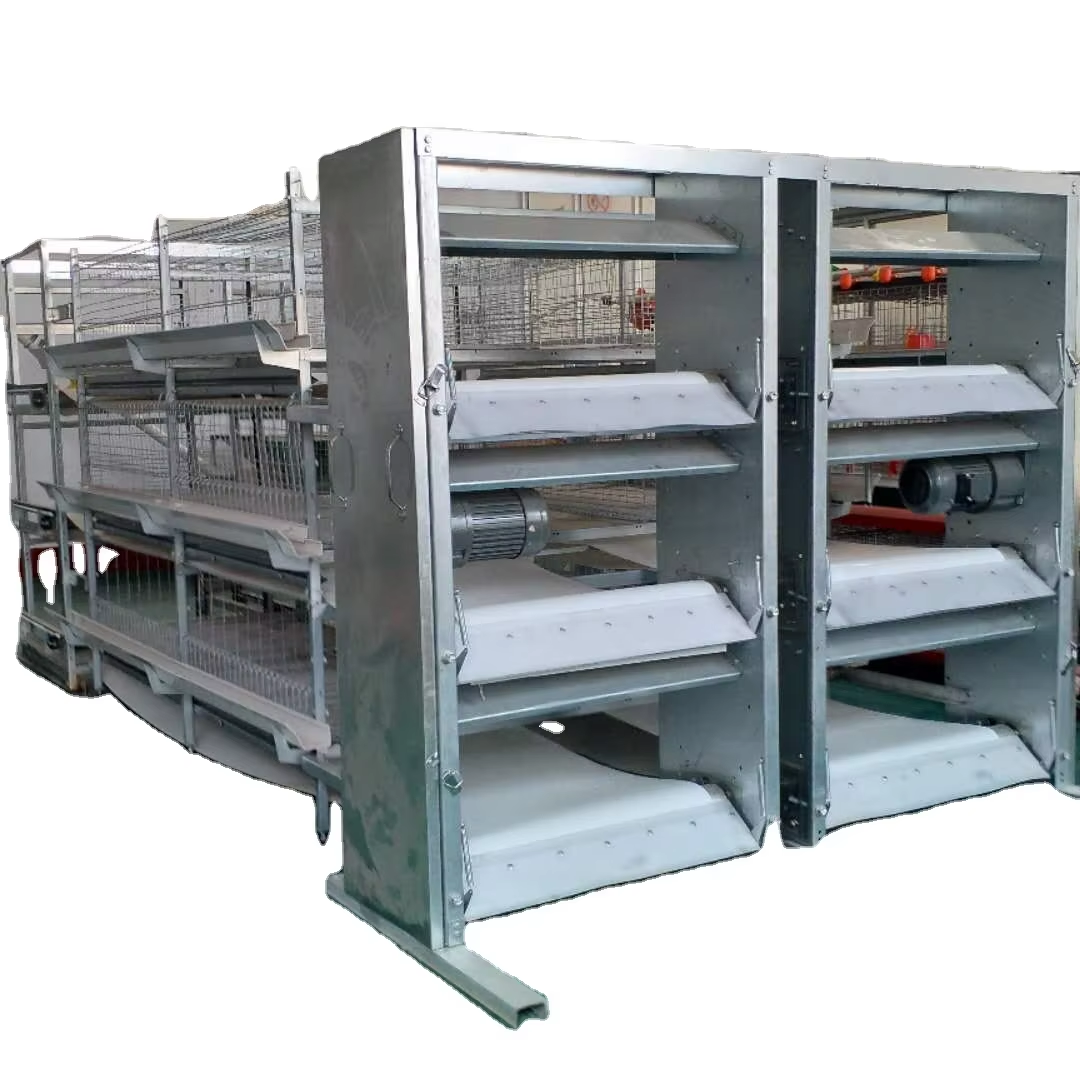
Selecting scalable chicken coop cages directly reduces daily labor and simplifies future growth. Modular systems—often constructed from galvanized steel—allow a small farm to expand vertically from a basic setup to 3–5 tiers without dismantling the entire structure, making assembly a matter of hours rather than days. This design also slashes maintenance frequency, as durable components and integrated automation minimize wear and manual cleaning. A key advantage is seamless integration of automated feeding and watering lines, which can reduce manual labor by up to 62% (2023 Poultry Automation Report). By choosing a system that evolves with production demands, operators achieve long-term sustainability and increased capacity without a complete infrastructure overhaul.
Evaluate True Cost of Ownership and Long-Term ROI
Upfront Investment vs. 5-Year Operational Costs: Predator Protection, Bedding, and Manure Integration
While the sticker price of a chicken coop cage may seem modest, the true cost of ownership includes ongoing expenses for predator protection, bedding, and manure integration. Over a typical five-year period, these operational costs can rival the initial investment—making a comprehensive ROI evaluation essential. Farmers who ignore items like wire reinforcement, absorbent litter, and waste removal systems risk underestimating the total financial commitment, ultimately compromising profitability.
FAQ Section
What are the minimum space requirements for egg-laying hens and broilers?
Egg-laying hens require approximately 750 cm² per bird in enriched cage systems, while broilers need around 700–800 cm² after 42 days of growth.
How do ventilation and lighting affect poultry welfare?
Ventilation prevents ammonia buildup, critical for respiratory health, and lighting programs optimize both laying performance and growth rates.
What materials are best for small-farm chicken coop cages?
Hot-dip galvanized steel excels in humid environments, while HDPE polymer is ideal for easy cleaning but requires temperature management.
Are modular chicken coop systems scalable?
Yes, modular systems facilitate vertical expansion, reducing assembly time and integrating automation for efficient operations.
What additional costs should I consider when investing in chicken coop cages?
Operational costs such as bedding, predator protection, and manure integration should be factored into the long-term ROI evaluation.
Table of Contents
- Match Cage Design to Bird Needs and Regulatory Standards
- Choose Durable, Climate-Appropriate Materials for Chicken Coop Cages
- Prioritize Scalable, Labor-Efficient Chicken Coop Cages
- Evaluate True Cost of Ownership and Long-Term ROI
-
FAQ Section
- What are the minimum space requirements for egg-laying hens and broilers?
- How do ventilation and lighting affect poultry welfare?
- What materials are best for small-farm chicken coop cages?
- Are modular chicken coop systems scalable?
- What additional costs should I consider when investing in chicken coop cages?