
 EN
EN
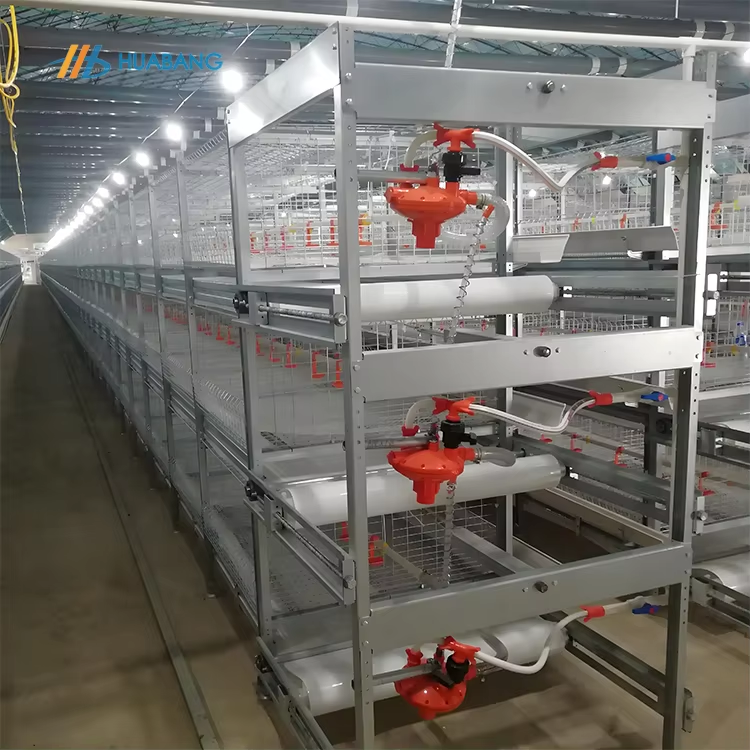
How Broiler Chicken Cage Durability Directly Impacts Long-Term Breeding Performance
Structural Integrity and Consistent Growth Metrics: Why Cage Stability Matters
A broiler chicken cage that maintains its shape under load preserves uniform space allocation—reducing stress-induced pecking and leg disorders. When floor mesh deflects more than 3 mm, footpad lesions increase by 22% within a single flock cycle (Poultry Welfare Research 2022). Stable cages also prevent gaps that trap birds, lowering emergency culling by 15%. By keeping feeding and drinking lines perfectly horizontal, structural rigidity ensures equal access for every bird—a 2023 meta-analysis found feed intake variance dropped by 9% when cages retained factory alignment. This consistency translates into a 4–6% improvement in batch weight uniformity, a key metric for processors. Rigid frames also dampen vibration from automated manure removal, reducing cortisol spikes and supporting long-term health. Over multiple cycles, these small gains compound, making cage stability a non-negotiable foundation for predictable, high-yield breeding.
Case Study: 5-Year Trial in Southern Thailand — Galvanized vs. Painted Steel Broiler Chicken Cages
A 2018–2023 controlled trial at a commercial farm in Songkhla compared 200 hot-dip galvanized cages with 200 painted-steel equivalents under identical stocking density and humidity. After five years, galvanized cages showed only 2% surface rust; painted units suffered 67% coating failure and deep pitting that compromised wire integrity. The galvanized group maintained a 0.4% lower mortality rate and a 0.12-point better FCR annually, saving an average of $0.18 per bird. Critically, painted cages required repairs to 14% of welds by year three, while galvanized welds remained intact. Structural sag in painted cages caused feeder misalignment and 3.5% annual feed wastage. By year five, the galvanized system’s total cost of ownership was 23% lower—proving that upfront material choice directly governs long-term breeding economics.
Material Science Behind Long-Lasting Broiler Chicken Cage Systems
Why Hot-Dip Galvanization Is the Gold Standard for Corrosion Resistance
Hot-dip galvanization creates a metallurgically bonded zinc layer that acts as a sacrificial anode—protecting steel even if scratched. This is critical for broiler chicken cages exposed to moisture, ammonia, and aggressive cleaning agents. Field studies across 120 poultry farms confirm hot-dip galvanized steel cages achieve an average lifespan of 15–20 years, while carbon steel alternatives fail within 5–8 years due to rust. The thick, uniform coating delivers a smooth, non-porous surface that resists bacterial build-up and simplifies manure removal. Leading manufacturers report these cages operate for over 20 years with minimal maintenance—significantly lowering replacement frequency and labor costs. In contrast, painted or cold-galvanized steel quickly succumbs to corrosion, causing structural weakness and hygiene risks. For operations prioritizing long-term biosecurity and equipment reliability, hot-dip galvanization remains the industry benchmark.
Design Lifespan Trends: From 8 to 15+ Years in Modern Broiler Chicken Cage Infrastructure
A decade ago, many broiler chicken cage systems relied on painted carbon steel or PVC-coated wire, delivering service lives of just 8–12 years. Today, advanced material science and automated manufacturing have pushed expected lifespans beyond 15 years. Comparative data from 120 poultry operations shows hot-dip galvanized steel cages now routinely reach 15–20 years, while aluminum alloy designs approach 12–15 years. Even stainless steel—though cost-prohibitive for whole-structure use—can exceed 25 years in high-wear components. This 40–60% lifespan extension stems from superior corrosion protection, precision engineering of load-bearing joints, and integrated environmental controls that reduce mechanical stress. As a result, modern broiler infrastructure shifts the economic model from short-term replacement cycles to a durable, low-maintenance asset that supports consistent breeding performance over a decade or more.
ROI and Operational Efficiency Gains from Durable Broiler Chicken Cages
Lower Annual Equipment Cost: Amortizing CapEx Over 12+ Years
The financial logic of a durable broiler chicken cage system becomes clear when examining extended service life. While standard galvanized cages may last 5–7 years, hot-dip galvanized systems routinely deliver 15–20 years of reliable operation. This transforms a major capital expense into a long-term, low-cost asset. By amortizing your equipment investment over 10 to 15 years, the annual depreciation cost per bird drops significantly compared to cheaper systems requiring frequent replacement. Eliminating the need to repurchase and reinstall cages multiple times over 20 years dramatically lowers total cost of ownership.
| Cost Factor | Hot-Dip Galvanized Cage | Low-Cost Cold Galvanized Cage |
|---|---|---|
| Expected Lifespan | 15–20 years | 5–7 years |
| Replacements Over 20 Years | 0 | 3–4 |
| Maintenance Labor Cost | Low (rust-resistant) | High (frequent repairs) |
| Estimated Resale Value After 10 Years | High | Zero (extensive rust) |
This analysis confirms that the initial price tag is only one part of the equation. The true operational cost—when spread over a decade or more—heavily favors durability, reducing equipment cost per bird harvested and protecting margins against market volatility.
Microenvironment Stability and Its Impact on Feed Conversion Ratio (FCR)
Robust cage construction directly stabilizes the internal environment—a critical driver of feed efficiency. A rigid frame prevents deformation, ensuring manure belts, feeders, and drinkers remain precisely aligned. This consistency allows ventilation systems to operate at peak efficiency, maintaining optimal ammonia levels, temperature, and humidity. A stable microenvironment reduces chronic stress, a known contributor to poor FCR. Controlled trial data demonstrated that an optimized cage system improved FCR from 1.78 to 1.65—a 7.3% gain (Guangxing IoT Trial, 2025). That reduction means each bird requires less feed to reach target market weight, directly lowering the largest single cost in broiler production and increasing profitability per flock.
Balancing Welfare, Compliance, and Productivity in Long-Term Broiler Chicken Cage Use
Long-term use of broiler chicken cages demands careful balance between productivity, animal welfare, and regulatory compliance. A 2024 comparative study found colony cage systems can improve growth performance and thermal regulation—but also elevate risk of leg deformities and reduced standing ability versus floor systems. Similarly, Zhou et al. (2024) showed high stocking densities in cages caused footpad health issues—even when body weight and FCR remained unaffected. These trade-offs underscore that maximizing output per square meter without corresponding design safeguards compromises welfare. Durable cage systems engineered with appropriate stocking densities, improved flooring, and environmental enrichment are essential to meet both performance targets and evolving standards. By investing in well-engineered, long-lasting infrastructure, producers support robust growth, reduce leg and foot issues, and ensure sustained compliance—aligning ethical farming with stable, long-term profitability.
Frequently Asked Questions
Why is cage durability important in broiler chicken farming?
Durable cages ensure consistent microenvironment stability, reduce stress-related health issues, and lower long-term operational costs, directly benefiting breeding performance.
What material is most suitable for broiler chicken cages?
Hot-dip galvanized steel is considered the gold standard for its corrosion resistance, long lifespan, and low maintenance requirements.
How does cage durability impact feed conversion ratio (FCR)?
Sturdy cages maintain structural alignment, optimizing ventilation, feeding, and drinking systems, which helps stabilize microenvironment, reducing stress and improving FCR.
What is the ROI difference between durable and low-cost cages?
Durable cages, like hot-dip galvanized systems, have lower long-term costs due to reduced replacement and repair rates. This higher investment can be amortized over 15–20 years, cutting equipment cost per bird significantly.
How do durable cages affect animal welfare compliance?
Well-designed durable cages reduce issues like leg and foot problems, ensuring welfare compliance while supporting long-term productivity.
Table of Contents
- How Broiler Chicken Cage Durability Directly Impacts Long-Term Breeding Performance
- Material Science Behind Long-Lasting Broiler Chicken Cage Systems
- ROI and Operational Efficiency Gains from Durable Broiler Chicken Cages
- Balancing Welfare, Compliance, and Productivity in Long-Term Broiler Chicken Cage Use
- Frequently Asked Questions