
 EN
EN
From Manual to Automated Poultry Farming: A Historical Perspective
Back in the 1980s, the poultry business started moving away from all those hands-on manual operations toward machines because people wanted more eggs and processed bird products worldwide. When workers became scarce and keeping things clean was getting harder, automatic chicken cages came into play. The Food and Agriculture Organization says adoption shot up around three times between 1990 and 2010. Looking at recent numbers from 2023, most new cage setups these days are actually smart ones connected to the internet. About two thirds of all new installations fall into this category, showing that modern farmers care more about precise control than sticking with old school approaches.
How Automatic Chicken Cages Are Transforming Large-Scale Farm Operations
According to research from the International Poultry Association back in 2022, modern housing systems can pack about 60% more birds into the same space compared to traditional open floor arrangements. The automation game has really changed things too automated feeding systems, waste management solutions, and climate controls have cut down direct human interaction with flocks by around 85%. This not only helps prevent diseases from spreading but also saves money on labor expenses. Take Brazil for example their biggest egg company saw operation costs drop by roughly 40% once they switched over to those multi-level automatic chicken cages back in 2021. Makes sense when you think about it all these technologies working together just make running a poultry operation so much smoother day to day.
Global Trends in Adoption of Automatic Chicken Cage Technology
The Asia Pacific region is really taking off when it comes to smart poultry farming tech, growing at around 19% per year since 2020. This surge makes sense given China's massive $1.2 billion push into modernizing their farms. Over in Europe though things are different. The EU introduced new rules back in 2023 requiring better cage designs for hens, which has sent lots of farmers scrambling to upgrade old facilities. We're seeing something interesting happening too with hybrid setups that mix automated feeding systems with spaces where chickens can actually roam around a bit. These mixed approaches seem to hit the sweet spot for most people concerned about animal welfare, hitting approval from roughly 7 out of 10 consumers based on last year's food trend research. Meanwhile down south in places like Nigeria and Indonesia, those fancy modular chicken cages that snap together easily have become pretty common, making up nearly half of all purchases in these growing markets.
Economic Benefits: Reducing Labor Costs and Increasing Profitability
Measurable Labor Cost Reduction Through Automation in Poultry Management
Chicken cage systems that automate things like feeding birds, providing water, and cleaning up after them cut down on how much work farmers have to do day in and day out. According to research published in the Poultry Management Quarterly last year, farms that switched to these automated setups saw their need for manual labor drop by almost half compared to old fashioned methods. The real game changer comes from having everything controlled from one central location. Once set up properly, these systems run themselves most of the time without needing someone constantly watching over them. That means operations stay consistent even when staffing is tight, which is becoming increasingly important as farm labor becomes harder to find across many regions.
Case Study: Achieving 40% Lower Labor Input With Automatic Chicken Cages
An egg farm somewhere in the Midwest saw their labor expenses drop by around 40 percent just one year after putting in those vertical automatic chicken cages. When they automated how eggs get collected and how feed goes out, they could move some staff over to check product quality and handle equipment upkeep. And guess what? Their daily production went up by nearly 20 percent too. Looking at industry data, most farms find that their money spent on automation pays off completely in about two to three years because they keep saving on labor costs month after month.
Long-Term Financial Advantages of Minimizing Human Dependency
Automatic chicken cages do more than just cut down on payroll costs they also help farms deal with problems caused by not having enough workers and mistakes made by people. Many poultry operations have seen around 60 percent fewer issues in their production when they switch to systems with automatic climate control and those smart sensors that monitor bird health through the internet of things. The big plus here is that operations run smoother, which makes it easier to plan how much feed and supplies they need. And let's talk money for a moment. When there aren't enough birds being produced because of these manual errors, farms lose about eight bucks twenty cents per bird each year according to some research published last year in the Poultry Economics Journal. That adds up fast across entire flocks.
Optimizing Space Efficiency Through High-Density Automated Rearing
How Automatic Chicken Cage Design Enables Maximum Land Use
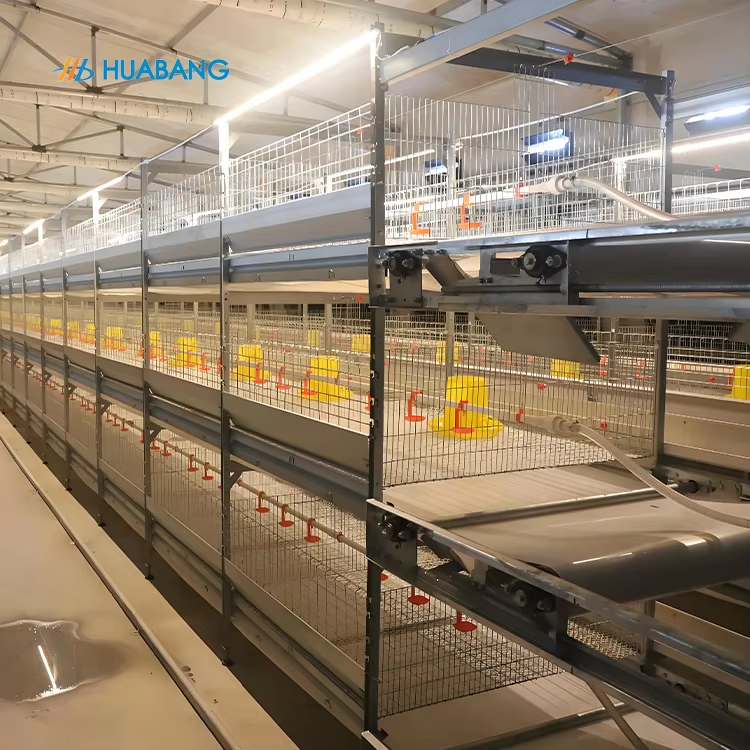
Today's automated chicken cages are designed vertically with modular sections that really pack in more birds per square foot. Most commercial operations go for three to five tiers stacked on top of each other, which means they can fit anywhere between 1.5 times to double the number of chickens compared to those old flat floor systems. The way these modern systems are built actually cuts down on wasted space between rows because everything gets routed through central feeding tubes and watering systems. And there are these special conveyor belts inside the cages themselves that collect eggs automatically without needing extra room around them. Farmers love this because it saves money on building costs and makes daily maintenance so much easier.
Data Insight: Housing 60% More Birds Per Square Meter With Automated Systems
A 2022 logistics study found automated poultry housing systems enable 60% higher stocking densities (42 birds/m² vs. 26 birds/m² in traditional setups) without compromising welfare standards. Environmental sensors maintain optimal air quality and temperature across densely populated tiers, addressing historical concerns about overcrowding.
Comparative Analysis: Traditional Floor Systems vs. Multi-Tier Automatic Cages
| Metric | Traditional Floor System | Automated Multi-Tier Cages |
|---|---|---|
| Birds per m² | 16-20 | 35-42 |
| Labor hours/1,000 birds | 8.7 | 2.1 |
| Feed spillage | 12% | 3.2% |
This spatial efficiency directly translates to 40–60% lower infrastructure costs per bird, as automated systems reduce required barn sizes while increasing production volume.
Core Features of a High-Performance Automatic Chicken Cage System
Integrated Automation: Feeding, Watering, Egg Collection, and Waste Removal
Modern systems synchronize four critical workflows:
- Curved conveyor belts distribute feed with ±2% portion accuracy, minimizing waste
- Nipple water lines ensure consistent hydration (12–15 mL/hen/hour)
- Shock-absorbent egg belts achieve <1.5% breakage rates during transport
- Tiered manure scrapers operate on 4-hour cycles to keep ammonia levels below 5 ppm
Operational data from leading manufacturers shows integrated automation cuts labor hours by 62% compared to manual systems.
IoT and Sensor Integration for Real-Time Health and Environmental Monitoring
Smart cages employ 12–18 sensors per 100-bird unit to track:
| Parameter | Measurement Frequency | Alert Threshold |
|---|---|---|
| Body temperature | Every 15 minutes | >41.7°C (fever) |
| Water intake | Per-hour totals | <50 mL/hen/day |
| Air quality index | Continuous | NH3 >25 ppm or CO2 >3,000 ppm |
Machine learning models analyze this data to predict disease outbreaks up to three days before clinical signs appear. Recent trials show a 23% reduction in mortality rates when predictive analytics are used.
Modular Scalability and Energy-Efficient Operation for Growing Farms
The steel-reinforced modular design allows farms to:
- Start with 500-bird units and expand incrementally
- Reconfigure layouts in under 48 hours for different poultry types
- Integrate solar-powered ventilation using 300W micro-turbines
Energy recovery systems capture heat from manure decomposition, reducing heating costs by 18–30% in cold climates. Variable-speed motors adjust power consumption based on flock density, achieving 0.9 kWh/bird/month–40% more efficient than traditional cage systems.
Overcoming Implementation Challenges in Automatic Chicken Cage Adoption
Addressing High Initial Investment With Financing and ROI Planning
Switching over to automated chicken cages typically costs around $12 to maybe even $18 for each spot where birds live according to some industry reports from PoultryTech back in 2023. But there's good news too - many systems come in modular pieces so farmers don't have to invest everything at once. Plus, several ag lenders these days are rolling out financing options that stretch across 5 or 7 years, tying returns directly to how much production goes up after installation. When folks combine renting equipment instead of buying it straight away with those government rebates for saving energy, they often see their money back faster than expected. Some operations report getting their investment back anywhere between 30% and almost half quicker than if they had paid cash upfront.
Ensuring Technical Support and Staff Training for Smooth Operation
Successful adoption depends on workforce capability in IoT monitoring and system maintenance. Leading manufacturers now bundle free onboarding programs with equipment purchases, covering:
- Real-time data interpretation for humidity and feed levels
- Troubleshooting common mechanical failures
- Preventative maintenance schedules
Operations reporting 90%+ system uptime typically allocate 15% of their implementation budget to ongoing training and skill development.
Building Trust Through Pilot Programs and Demonstration Farms
When Iowa’s AgriPioneer Cooperative trialed automatic chicken cages across 12 farms, they achieved 18% higher egg yields within six months–a result showcased at seven regional demonstration sites. This “see-to-believe” approach helps overcome skepticism by allowing farmers to:
- Compare mortality rates side-by-side with traditional setups
- Audit automated waste management efficiency
- Calculate labor savings using actual farm data
Such transparency has accelerated adoption, with 63% of pilot participants expanding their systems within two years (USDA 2024).
FAQ
What are automatic chicken cages?
Automatic chicken cages are modern farming systems that automate activities like feeding, watering, egg collection, and waste management, which reduces manual labor and optimizes space efficiency.
How do automatic chicken cages benefit large-scale farm operations?
They allow for higher stocking densities, reduce labor costs, and enhance productivity with integrated automation, resulting in smoother farm operations and higher profitability.
What are the common challenges in adopting automatic chicken cages?
Common challenges include high initial investment costs and the need for technical support and staff training to ensure smooth operation. Financing options and training programs are available to help overcome these barriers.
Table of Contents
- From Manual to Automated Poultry Farming: A Historical Perspective
- How Automatic Chicken Cages Are Transforming Large-Scale Farm Operations
- Global Trends in Adoption of Automatic Chicken Cage Technology
- Economic Benefits: Reducing Labor Costs and Increasing Profitability
- Optimizing Space Efficiency Through High-Density Automated Rearing
- How Automatic Chicken Cage Design Enables Maximum Land Use
- Data Insight: Housing 60% More Birds Per Square Meter With Automated Systems
- Comparative Analysis: Traditional Floor Systems vs. Multi-Tier Automatic Cages
- Core Features of a High-Performance Automatic Chicken Cage System
- Overcoming Implementation Challenges in Automatic Chicken Cage Adoption
- FAQ