
 EN
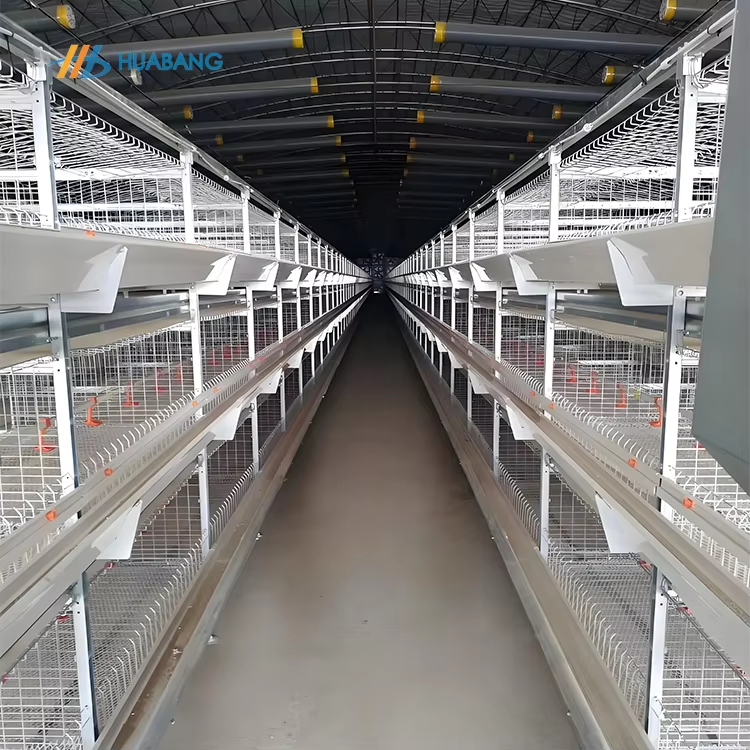
Labor Cost Reduction and Workforce Optimization
Quantified labor savings: From 3–5 workers per 10,000 birds to <1
A fully automatic chicken cage system transforms labor requirements for commercial layer operations. Traditional manual or semi-automated farms typically need 3–5 workers per 10,000 laying hens to handle feeding, egg collection, and manure removal. Integrated automation consolidates these tasks into a synchronized, machine-driven workflow—reducing staffing to less than one full-time equivalent per 10,000 birds (International Poultry Council, 2023). This represents an 80–90% reduction in direct labor hours. For a 50,000-bird facility, staffing drops from 15–25 employees to just 2–3, freeing capital for strategic investments. Savings extend beyond wages to recruitment, training, uniforms, and HR overhead. Crucially, automation delivers consistent performance—unaffected by fatigue, shift turnover, or human error—while enabling skilled staff to focus on health monitoring, data analysis, and proactive flock management. The result is a scalable, leaner operation where output grows without proportional headcount increases.
Reduction in repetitive injury risk and mitigation of staffing volatility
Automation also delivers significant ergonomic and operational resilience benefits. Manual egg collection, shovel-based manure removal, and heavy feed handling are leading causes of musculoskeletal injuries—including back strain, carpal tunnel syndrome, and repetitive stress disorders. By transferring these physically demanding tasks to machines, automated systems sharply reduce injury incidence, lowering workers’ compensation claims and absenteeism. The reduced physical burden also broadens the pool of eligible workers, including those with mobility or stamina limitations. Equally important, automation insulates operations from labor market volatility—especially in regions dependent on seasonal or migrant labor. With production governed by precise machine cycles rather than human availability, output remains stable despite turnover, no-shows, or wage fluctuations. This predictability strengthens supply chain reliability and supports a more resilient, future-proof business model.
Enhanced Chicken Cage Operational Efficiency and System Reliability
Cycle time compression: Feed, egg, and manure operations synchronized in <90 sec/batch
Fully automatic chicken cage systems eliminate sequential delays by executing feed delivery, egg collection, and manure removal simultaneously in a tightly coordinated cycle. In a standard 50-meter cage row, feed chains moving at 36 meters/minute deliver rations to every bird in ~83 seconds; egg belts operating at 6 meters/minute transport freshly laid eggs directly to the collection point; and manure belts convey waste to drying units at 3–6 meters/minute—all under centralized controller orchestration. What once required 8–12 minutes of scattered manual effort is now completed in under 90 seconds. This synchronization minimizes feed competition, reduces egg-floor contact time, and maintains environmental stability—directly supporting higher laying rates, cleaner eggs, and improved flock uniformity.
Uptime increase: >98% system availability vs. ~85% in semi-automatic chicken cage setups
Reliability is a defining advantage of fully automatic systems. Industrial-grade components—including direct-drive motors and electronically monitored belt tensioners—significantly lower mechanical failure rates. Real-time sensor networks track vibration, motor current, and belt alignment, triggering predictive maintenance alerts before failures occur. Semi-automatic setups, by contrast, depend on intermittent human inspection and reactive clearing—leaving them vulnerable to undetected jams, misalignments, and motor burnouts. Field data from typical 20,000-bird operations shows:
| System Type | Average System Availability | Primary Downtime Drivers |
|---|---|---|
| Fully automatic chicken cage | >98% | Scheduled maintenance, rare sensor recalibration |
| Semi‑automatic chicken cage | ~85% | Belt jams, manual feeding errors, motor burnouts |
This 13-percentage-point uptime advantage yields roughly 47 additional full production days annually—boosting egg output, revenue, and long-term equipment lifespan while reducing emergency repair costs.
Improved Egg Quality, Yield, and Hygiene Through Automated Collection
Egg breakage reduction from 4–6% to <0.8% and Grade A yield uplift of 12–15%
Automated egg collection fundamentally improves egg integrity and hygiene. In manual or semi-automated systems, breakage rates range from 4% to 6%, primarily due to mishandling, dropping, or hens pecking at eggs left in nests. Fully automatic systems use gently sloping roll-away floors and soft-conveyor belts to move eggs from nest to collection point within seconds—eliminating pecking risk and minimizing physical contact. Breakage falls below 0.8%. Rapid removal also prevents eggs from overheating in nests, preserving internal quality and inhibiting bacterial growth. Fewer hairline cracks mean a 12–15% increase in Grade A eggs. Because eggs avoid contact with soiled litter and human hands, contamination drops significantly—reducing washing intensity and post-collection processing costs. The net effect is higher marketable yield, stronger brand reputation for quality, and measurable revenue lift per bird.
Healthier Flock Environment: Manure Management, Air Quality, and Disease Prevention
Daily automated manure drying cuts ammonia emissions by 37% and suppresses pathogen load
Accumulated manure in high-density housing is a major source of ammonia emissions and pathogen proliferation—including Salmonella and E. coli. Fully automatic chicken cage systems mitigate this through daily manure belt removal and rapid drying. Compared to conventional pit storage, this practice cuts ammonia emissions by 37% (2023 field study) and reduces microbial load per gram of litter by over 60%. Within 24 hours of drying, E. coli counts decline by 50–70%. Lower ammonia levels reduce respiratory stress and tracheal damage, while drier conditions inhibit enteric pathogen survival. Ventilation systems operate more efficiently, lowering energy use. Collectively, these improvements support lower mortality, better feed conversion, and fewer antibiotic interventions—demonstrating how environmental control directly enhances both animal welfare and production economics.
Feed Efficiency Gains and Faster ROI with Fully Automatic Chicken Cage Systems
FCR improvement (2.15 → 1.98) and spillage reduction (8% → <1.2%)
Automated precision feeding drives meaningful gains in feed efficiency. Traditional manual systems often achieve a feed conversion ratio (FCR) of ~2.15, partly due to inconsistent distribution and overfeeding. Fully automatic systems deliver calibrated rations on schedule, reducing FCR to 1.98—a 0.17-point improvement that equates to 0.17 kg less feed per kg of weight gain. For a 20,000-bird flock, this saves several tons of feed annually. Spillage—another major source of waste—drops from up to 8% in manual setups to under 1.2% with automated feeders. Near-zero loss ensures nearly all feed is consumed, directly improving margins. Data from 147 commercial farms confirms the trend: average FCR improved from 2.4:1 to 2.1:1 after automation, with top performers achieving ratios below 2.0:1.
Payback achieved in 14–18 months for flocks ≥20,000 birds
For layer operations with 20,000 birds or more, the investment in a fully automatic chicken cage system typically pays for itself in 14–18 months. This rapid return stems from three primary drivers: labor cost reductions of up to 70%; annual feed savings exceeding $15,000 for a 20,000-bird flock; and increased revenue from higher Grade A yield (12–15% uplift) and dramatically lower egg breakage (5% → <0.8%). A 7-year financial analysis of modern adopters shows ROI ranging from 220% to 300%, confirming automation’s long-term economic strength—not just as a cost-saving tool, but as a foundational upgrade for productivity, quality, and sustainability.
FAQs
How does automation reduce labor costs in chicken cage operations?
Automation integrates feeding, egg collection, and manure removal, minimizing labor requirements from 3–5 workers per 10,000 birds to less than one full-time equivalent. This reduces direct labor hours and operational expenses.
What impact does automation have on egg quality and yield?
Automated systems drastically cut egg breakage rates from 4–6% to below 0.8%, improving Grade A egg yield by 12–15%. Rapid collection also enhances hygiene and reduces bacterial contamination.
Can automation improve feed efficiency?
Yes, automated precision feeding improves feed conversion ratios from 2.15 to 1.98, while spillage drops from 8% to under 1.2%, ensuring near-zero feed waste and significant cost savings.
How does automation benefit flock health and the environment?
Daily manure drying reduces ammonia emissions by 37% and microbial loads, while automated ventilation ensures good air quality. This supports lower mortality rates and better overall flock welfare.
What is the ROI for a fully automatic chicken cage system?
For flocks of 20,000 birds or more, typical payback is achieved within 14–18 months due to labor cost savings, feed efficiency gains, and higher revenue from reduced egg breakage and improved egg yield.
Table of Contents
- Labor Cost Reduction and Workforce Optimization
- Enhanced Chicken Cage Operational Efficiency and System Reliability
- Improved Egg Quality, Yield, and Hygiene Through Automated Collection
- Healthier Flock Environment: Manure Management, Air Quality, and Disease Prevention
- Feed Efficiency Gains and Faster ROI with Fully Automatic Chicken Cage Systems
- FAQs