
 EN
EN
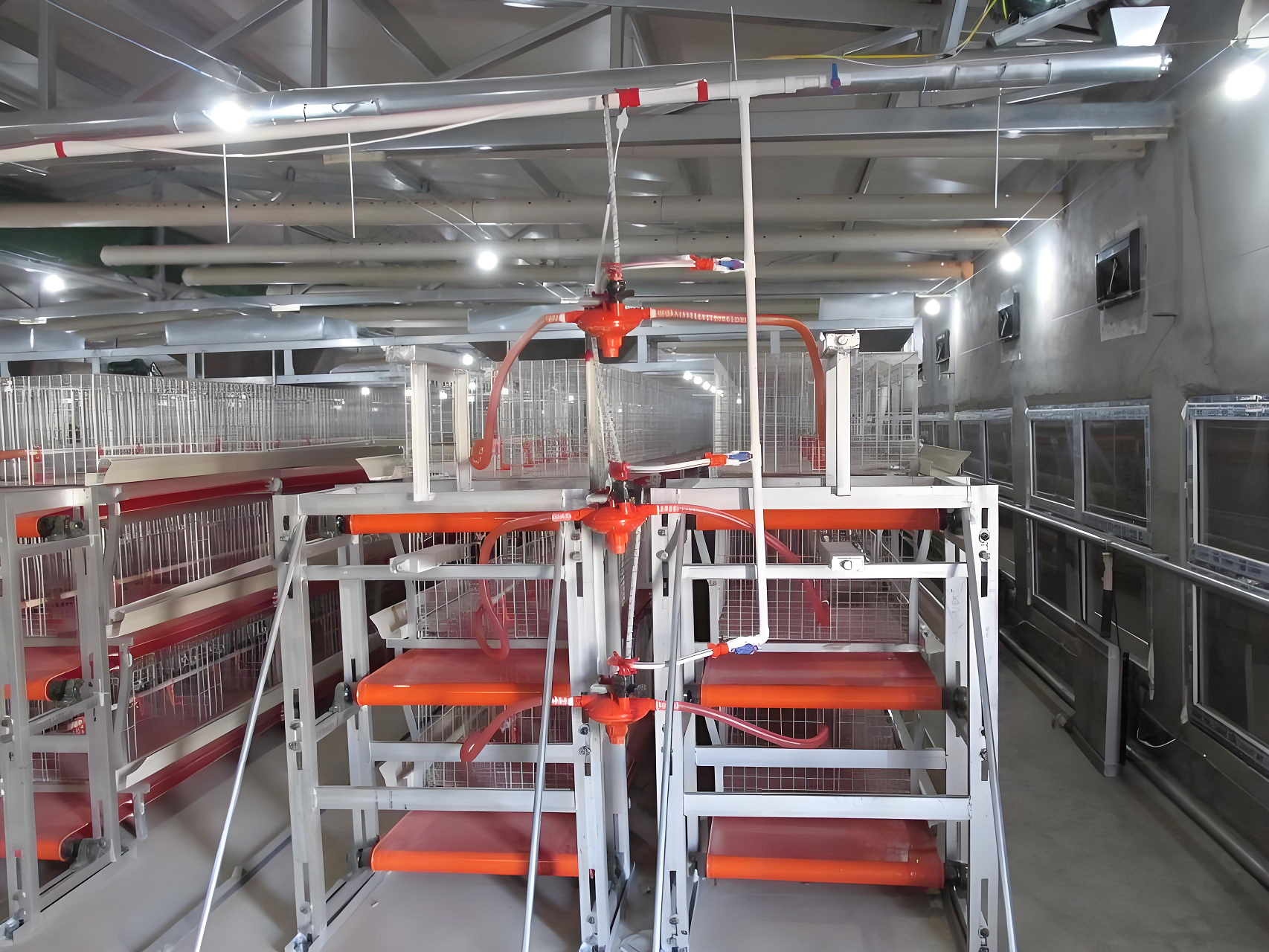
Automated Feeding Systems: Precision and Labor Reduction in Poultry Farms
How Automated Feeding Systems Minimize Manual Labor in Poultry Houses
The latest automated feeding systems cut down on labor requirements somewhere around 60 to maybe even 80 percent when compared to doing everything manually according to Poultry Tech from last year. These systems take over all those boring repetitive jobs that used to require someone lugging buckets around every day. Instead they use these chain and pan setups or troughs that run on programming so they can handle feeding for whole barns without breaking a sweat. What this means for farmers is their workers get freed up to do things that actually matter more, like keeping an eye on how healthy the birds are in different parts of the operation. Not only does this boost overall productivity but it also helps ensure better care for the animals which makes sense for anyone running a poultry business long term.
Integration of Timers, Sensors, and IoT for Consistent Feed Delivery
When smart feeders work alongside environmental controls, they can tweak how much feed goes out depending on what the birds actually need at any given moment. Take a poultry farm in Texas for instance they saw their feed conversion ratio jump about 12 points once they put in those little moisture sensors. These gadgets stop the feed from getting all clumpy when humidity creeps up during summer months. The result? Birds get just the right amount of nutrients without wasting precious resources on overfeeding.
Modular Designs Adaptable to Various Poultry House Layouts
Manufacturers offer three scalable configurations to suit different housing types:
| System Type | Best For | Capacity Range |
|---|---|---|
| Chain-and-pan | Long barns | 5K—100K birds |
| Spiral auger | Multi-level cages | 10K—50K birds |
| Conveyor belt | Free-range setups | 1K—20K birds |
This modularity allows seamless retrofitting into existing structures without major renovations.
Case Study: 40% Labor Reduction on a 50,000-Bird Broiler Farm
A Missouri farm using IoT-enabled feeders reduced daily labor from 8 to 3 hours per feeding cycle. Load cells automatically trigger refills when troughs reach 15% capacity, eliminating manual checks. Over six flocks, the farm saved $11,200 in labor costs and maintained a mortality rate of 0.94%, outperforming the industry average by 0.36%.
Egg Collection and Handling Automation: Enhancing Efficiency and Hygiene
Automated egg collection systems reducing breakage and contamination
Automated systems significantly reduce egg breakage—by up to 40%—compared to manual collection. Gentle conveyor belts and robotic arms minimize physical handling, while antimicrobial surfaces and real-time quality sensors detect cracks or contamination. Recent implementations have lowered bacterial cross-contamination risks by 15% (LinkedIn 2024), enhancing food safety and product consistency.
Conveyor integration with grading and packaging for scalability
Integrated conveyor systems streamline operations by combining weight-based grading, UV sanitation, and shock-absorbent packaging into a single workflow. This automation eliminates 12—15 manual touchpoints per egg, enabling large facilities to process over 30,000 eggs per hour while maintaining compliance with USDA and EU hygiene standards.
Case study: 30% efficiency gain in a large-scale layer farm
A 200,000-hen facility in Iowa upgraded its egg-handling infrastructure with full automation, yielding measurable improvements:
| Metric | Pre-Automation | Post-Automation |
|---|---|---|
| Daily Processing Time | 14 hours | 9.8 hours |
| Labor Costs/Week | $3,200 | $2,240 |
| Grade A Eggs (%) | 82% | 94% |
The $180,000 investment achieved full return within 26 months through reduced labor expenses and lower product loss.
Poultry Trolley Systems: Mobile Solutions for Efficient Farm Operations
Battery-powered trolleys reducing walking distance and labor strain
Electric trolleys reduce operator walking distances by 60—80% compared to manual carts (Poultry Operations Journal 2023). With remote-controlled operation and load capacities up to 300 lbs, they decrease physical strain during feeding and equipment transport. Rugged tires and emergency brakes ensure stability and safety on uneven or sloped floors.
Wood track-based installation for cost-effective deployment
Using standard 2×6 lumber, wood track systems cut installation costs by 70% compared to steel rails. Most setups require only basic carpentry tools, and modular designs accommodate houses ranging from 400 to 600 feet long. A 2024 analysis shows that 95% of installations are completed without specialized labor, with ROI typically realized within 14 months.
Multi-purpose use in feeding, health checks, and mortality removal
Modern trolleys support multiple functions across the production cycle:
- Detachable 50-gallon hoppers for efficient feed distribution
- Mobile exam stations with tool storage for routine health inspections
- Insulated compartments that enable hygienic mortality removal—28% faster than traditional wheelbarrow methods
This versatility enhances operational agility while reducing equipment redundancy.
Automatic Chicken Coop Doors and Remote-Controlled Equipment: Security and Smart Management
Benefits of Automatic Doors in Free-Range and Mixed Housing Systems
Automatic coop doors enhance security in free-range and mixed housing by regulating flock access and deterring predators. Research indicates these systems reduce predator breaches by 63% compared to manual doors. Farmers using daylight-aligned access cycles report an 18% improvement in flock safety, particularly in hybrid barn-free-range setups.
Light-Sensing and Timer-Based Operation for Predator Protection
Photocell sensors help doors open when daylight arrives and shut them down as night falls, which stops those pesky nighttime critters from getting inside. Farmers can tweak settings through their phones if bad weather hits or something goes wrong, and this actually saved around four thousand two hundred dollars on average for each farm back in 2023 according to some field tests they ran. Even better, these systems come with backup batteries so everything keeps working properly when there's no electricity running through the lines, meaning animals stay safe even during unexpected blackouts.
Remote-Controlled Tools for Feeding, Transport, and Mortality Management
IoT-enabled tools centralize management of key tasks:
- Adjust feed rations via smartphone using real-time bird weight data
- Operate motorized carts for vaccine delivery or feed transport
- Receive alerts from weight-triggered sensors detecting deceased birds
Farmers using remote-operated systems save 7.2 hours weekly on routine checks and improve emergency response times by 40%.
Balancing Upfront Costs with Long-Term ROI in Smart Poultry Equipment
While smart poultry equipment requires a 15—20% higher initial investment, it delivers strong returns within 22—28 months. Energy-efficient door mechanisms reduce HVAC costs by 12%, and labor savings average $18,000 annually per 10,000-bird capacity. With industry adoption projected to grow by 35% by 2027, producers are increasingly investing in automation to boost resilience and efficiency.
FAQ Section
What are the primary benefits of automated feeding systems?
Automated feeding systems reduce labor costs significantly, increase the efficiency of feed distribution, and improve the overall health monitoring of poultry by freeing up workers for more critical tasks.
How does automation affect egg handling and collection?
Automation in egg handling minimizes breakage and contamination through gentle conveyor belts and robotic handling, enhancing food safety and consistency. It also integrates grading and packaging to streamline the process.
What advantages do poultry trolley systems offer?
Poultry trolley systems reduce walking distances for workers, decrease physical strain, and offer versatile use for feeding, health checks, and mortality removal, all while being cost-effective.
How do automatic chicken coop doors enhance security?
Automatic chicken coop doors regulate access and deter predators, lowering breach incidents significantly. They operate on light sensing, providing flexibility, and come with backup battery systems for reliability even during power outages.
Table of Contents
- Automated Feeding Systems: Precision and Labor Reduction in Poultry Farms
- Egg Collection and Handling Automation: Enhancing Efficiency and Hygiene
- Poultry Trolley Systems: Mobile Solutions for Efficient Farm Operations
-
Automatic Chicken Coop Doors and Remote-Controlled Equipment: Security and Smart Management
- Benefits of Automatic Doors in Free-Range and Mixed Housing Systems
- Light-Sensing and Timer-Based Operation for Predator Protection
- Remote-Controlled Tools for Feeding, Transport, and Mortality Management
- Balancing Upfront Costs with Long-Term ROI in Smart Poultry Equipment
- FAQ Section
- What are the primary benefits of automated feeding systems?
- How does automation affect egg handling and collection?
- What advantages do poultry trolley systems offer?
- How do automatic chicken coop doors enhance security?