
 EN
EN
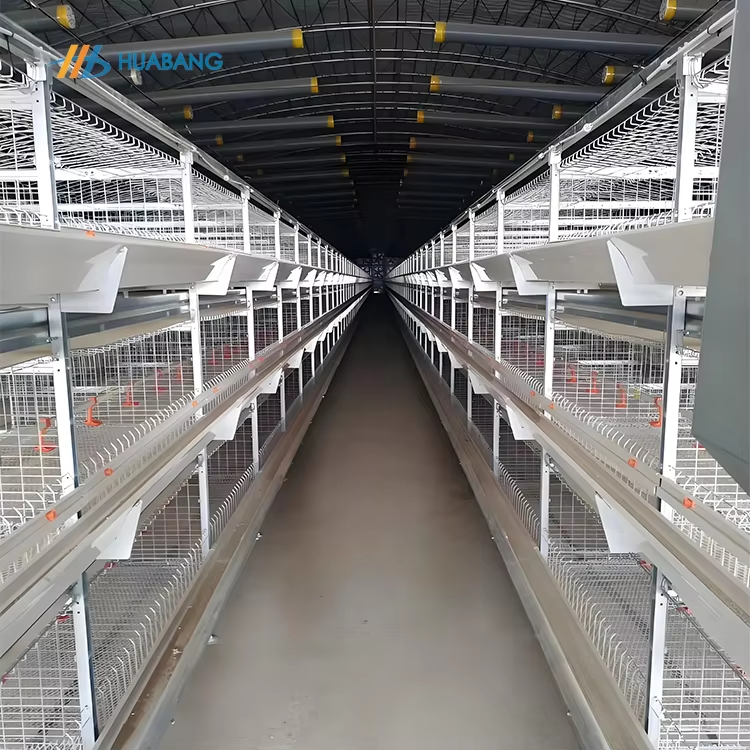
Labor Savings and Operational Efficiency Gains
Replacing Manual Feeding, Cleaning, and Egg Collection with Precision Automation
Traditional poultry farms rely on manual labor for feeding, egg collection, manure removal, and routine cleaning—tasks that are repetitive, time-consuming, and prone to human error. An automatic chicken cage system mechanizes these processes. Precision feeders dispense exact rations according to age and production stage, reducing feed waste by up to 8–10%. Automatic egg conveyors gently collect eggs and roll them to a central packing area, minimizing breakage and saving hours of daily labor. Manure belts run beneath the cages, removing waste automatically and improving air quality. These integrated automation solutions can cut labor costs by 50–70%, while also lowering training expenses and injury-related costs associated with manual handling. The result is a consistent, repeatable workflow that boosts overall throughput and allows farm operators to focus on strategic management rather than routine chores.
Data-Driven Workflow Optimization: Real-Time Monitoring and Reduced Downtime
Beyond simple mechanization, modern automatic chicken cage systems incorporate sensors and IoT-based control panels. Temperature, humidity, ammonia levels, and feed consumption are tracked continuously. When an abnormality is detected—such as a sudden drop in water intake—the system triggers an alert, enabling immediate intervention. This real-time visibility reduces unplanned downtime and prevents small issues from escalating. Historical data also helps optimize cleaning schedules, feeder calibration, and light cycles. Over time, farms that adopt these smart monitoring tools report fewer equipment failures, shorter setup times, and the ability to run operations with minimal supervision. The combination of predictive maintenance and automated task execution translates into a more resilient, efficient poultry operation that scales easily with growing demand.
Enhanced Environmental Control and Animal Welfare Outcomes
Precise environmental management is foundational to poultry health and longevity. Automatic chicken cage systems centralize ventilation, temperature, humidity, and lighting controls into one integrated platform. Sensors continually monitor barn conditions, adjusting airflow volumes and heat levels in real-time. Humidity targets remain stable to mitigate respiratory stress risks. Programmable LED lighting mimics natural dawn/dusk cycles to support circadian rhythms without manual intervention. This closed-loop approach eliminates fluctuations that challenge manual systems.
Measurable Welfare Improvements: 12–18% Lower Mortality and Reduced Stress Indicators
Optimized environments correlate with tangible health gains. Studies report mortality reductions between 12 and 18% in controlled-climate setups (Applied Animal Behaviour Science, 2024). Consistent access to feeders and reduced density lower aggression incidents. Better feather coverage acts as a visible indicator of reduced stress. Activity monitors note higher foraging engagement compared to static cages. Collectively, these biological markers validate welfare advancements through systemic automation.
Economic Viability and Resource Efficiency of Automatic Chicken Cage Adoption
Feed Conversion Ratio (FCR) Improvement: 8.3% Gain Through Precise Delivery and Waste Reduction
Precision feeding systems within automatic chicken cage architectures ensure exact nutrient delivery, minimizing feed spillage and optimizing consumption. By eliminating uneven distribution common in manual methods, adoption achieves an 8.3% improvement in Feed Conversion Ratio (FCR). Sensors monitor intake patterns, dynamically adjusting portion sizes to reduce metabolic strain and wastage by over 15%. Combined with automated manure removal reducing ammonia exposure, this enhances nutrient absorption efficiency — translating directly into lower feed costs per unit of production. Integrated water metering and targeted climate control further contribute to reduced resource intensity per bird, with farms reporting 12% less water usage.
ROI Timeline and Total Cost of Ownership: Break-Even Achieved in 22–26 Months
Modern poultry operations recover automated chicken cage investments between 22 and 26 months. Key drivers include the 8.3% FCR gain, a 17% reduction in labor hours over manual systems, and lower veterinary expenses linked to improved environmental hygiene. Operational-scale efficiency combines these elements: a 15-kWh/m² energy reduction profile due to optimized HVAC integration, alongside compostable manure capture decreasing downstream waste costs. Case analyses confirm a $23k net gain per 10,000-bird unit within 32 months, with long-term stability stemming from resilient low-maintenance design.

Scalability, Standardization, and Future-Proofing with Automatic Chicken Cage Infrastructure
Modern poultry operations increasingly rely on scalable and modular automatic chicken cage designs to adapt seamlessly to evolving production demands. These standardized solutions enable farms to systematically expand capacity without compromising facility uniformity, significantly reducing customization costs during growth phases. Built-in integration capabilities for IoT sensors and predictive maintenance tools add layers of future-proofing to the infrastructure, positioning poultry businesses to leverage emerging technologies as they become market-relevant. Evidence from operational transitions indicates labor cost reductions exceeding 60% post-implementation, with modular approaches cutting retrofitting expenses by 28–40% compared to traditional retrofits. This inherent adaptability guarantees long-term operational relevance while preventing premature system obsolescence.
Frequently Asked Questions (FAQ)
What is the role of precision feeders in automatic chicken cages?
Precision feeders dispense exact rations based on age and production stage, reducing feed waste by 8–10% and ensuring optimal nutrient delivery to the poultry.
How do automatic chicken cages improve animal welfare?
They provide optimized environmental controls, consistent access to feeders, and reduced density to lower aggression incidents and stress indicators, improving overall health and reducing mortality rates by 12–18%.
What is the expected ROI timeline for investing in automatic chicken cage systems?
Most poultry operations achieve break-even within 22–26 months post-implementation, driven by efficiency gains, labor cost reductions, and lower veterinary expenses.
Can automatic chicken cages be scalable for growing operations?
Yes, they feature modular designs that prioritize scalability, enabling farms to expand capacity systematically without compromising facility uniformity or increasing retrofitting costs excessively.
Table of Contents
- Labor Savings and Operational Efficiency Gains
- Enhanced Environmental Control and Animal Welfare Outcomes
- Economic Viability and Resource Efficiency of Automatic Chicken Cage Adoption
- Scalability, Standardization, and Future-Proofing with Automatic Chicken Cage Infrastructure
- Frequently Asked Questions (FAQ)