
 EN
EN
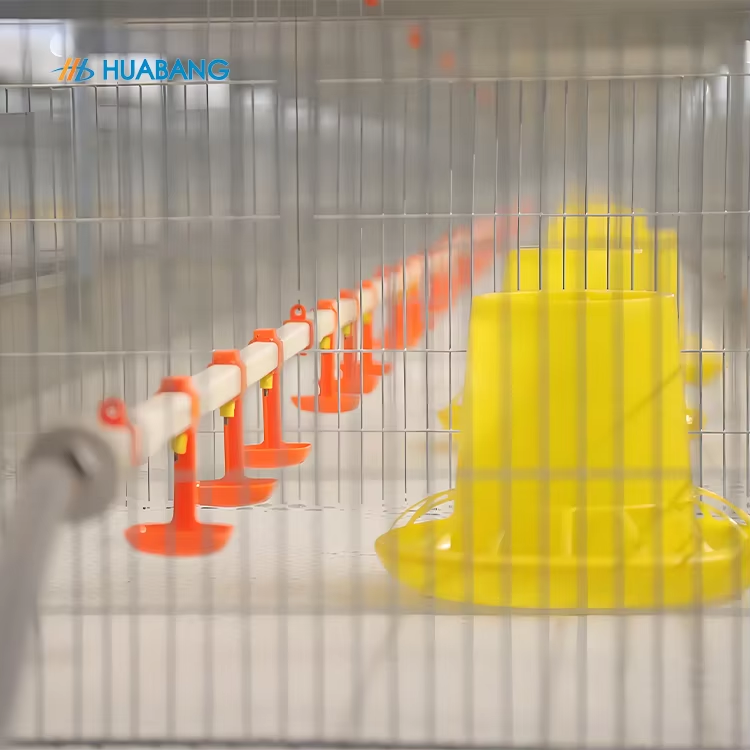
The Direct Impact of Environmental Control on Poultry Farm Cage Performance
How microclimate gradients (front/back, upper/lower tiers) in poultry farm cage systems drive uneven stress and productivity loss
In multi-tier poultry farm cage installations, microclimate variation is the primary driver of inconsistent bird performance. Upper tiers commonly run 3–5 °C warmer than lower rows, while stagnant air and elevated ammonia accumulate at the rear—creating a patchwork of thermal and respiratory stress. A 2022 field survey found birds in the warmest zones consumed 8% less feed than those in well-ventilated front sections, yet their water intake surged due to panting. This mismatch directly suppresses hen-day egg production and increases mortality in affected cages. Meanwhile, cooler, damp corners elevate respiratory disease risk. Critically, productivity loss isn’t uniform—it compounds cage by cage, eroding overall flock output. Precision environmental control must therefore target these microgradients—not just average house readings. Installing variable-speed fans, airflow baffles, and tier-level temperature probes can narrow vertical and longitudinal temperature spreads to under 1.5 °C. A 2023 trial across 18 commercial layer houses demonstrated that holding front-to-back humidity differences below 10% improved feed conversion ratio (FCR) by 0.12 points.
Physiological mechanisms: Temperature, humidity, and airspeed effects on feed conversion ratio and immune function in caged birds
Laying hens operate within a narrow thermal neutral zone of 18–24 °C. Above 28 °C, metabolic heat dissipation diverts energy from egg synthesis: for every 1 °C rise above 24 °C, feed intake drops 1.5%, and FCR worsens by 0.05–0.08 points. High relative humidity impedes evaporative cooling, accelerating body temperature rise; conversely, airspeed ≥0.5 m/s at bird level offsets heat load by 2–3 °C—but only when humidity remains controlled. Immune function is equally sensitive: chronic heat stress elevates corticosterone, suppressing antibody production and reducing vaccine efficacy. A 2021 study showed birds exposed to daily temperature swings exceeding 6 °C had 12% lower Newcastle disease titers than those in stable conditions. Maintaining consistent temperature, humidity below 70%, and gentle, uniform airspeed across all tiers safeguards both digestive efficiency and disease resistance.
Ventilation Design Tailored for Poultry Farm Cage Systems
Optimizing fan placement, negative pressure, and airflow profiles to match cage tiering and bird density
Uniform airflow in a poultry farm cage system requires precise integration of fan placement, static pressure, and inlet design. In multi-tier houses, the stack effect and bird-occupied zones generate vertical temperature gradients of 2–4 °C, concentrating heat and ammonia toward upper decks. A negative-pressure system with side-wall inlets and tunnel fans can flatten these gradients—but only if static pressure is maintained at 0.05–0.10 in H₂O. Deviations cause dead zones or disruptive drafts. Exhaust fans must be positioned on the leeward end and sized to exchange the full house volume every 45–60 seconds at peak stocking density. The table below summarizes validated airflow targets per tier for a typical 4-deck A-frame cage:
| Cage Tier | Recommended Air Speed (m/s) | Minimum Inlet Area (cm²/bird) | Negative Pressure (Pa) |
|---|---|---|---|
| Top | 2.0–2.5 | 12–15 | 20–25 |
| Middle | 1.5–2.0 | 10–12 | 18–22 |
| Bottom | 1.0–1.5 | 8–10 | 15–20 |
These values reflect field measurements from 12 commercial layer houses (2023) and support the goal of keeping the temperature-humidity index below 70 at bird level. Because the bottom tier is often shielded by upper structures, it requires dedicated fresh-air delivery—typically via perforated ceiling ducts—to prevent localized ammonia pooling. When fan staging and inlet control are automated using real-time sensors, FCR improves by up to 0.08 points.
Advanced air quality engineering: Electrostatic precipitation and misting integration for high-density poultry farm cage operations
Beyond conventional ventilation, hybrid air quality systems combining electrostatic precipitation (ESP) with high-pressure misting address fine dust and heat stress simultaneously. ESP units installed in the exhaust stream remove >90% of PM2.5, significantly lowering airborne microbial loads linked to respiratory disease. When integrated with a 70-bar misting line, charged water droplets capture dust and cool incoming air by 3–5 °C through evaporative cooling—a critical advantage in high-density layouts where stocking exceeds 25 birds/m². A coordinated control strategy activates ESP during peak dust generation (e.g., feeding hours) and triggers misting only when ambient temperature rises above 28 °C. This maintains in-house ammonia below 10 ppm and relative humidity between 55–65%. Trials across Southeast Asian farms (2024) showed this approach increased hen-day production by 2.5%, confirming that precision air quality engineering is not optional—it’s a measurable performance amplifier for modern cage operations.
Ammonia Control as a Critical KPI for Egg Production in Poultry Farm Cage Facilities
NH₃ <15 ppm and hen-day production: Evidence from 12 EU layer trials showing +4.2% average gain under precision environmental control
Ammonia (NH₃) concentration is a decisive performance indicator—and one of the most actionable KPIs—in high-density poultry farm cage systems. A 2023 meta-analysis of 12 commercial layer trials across the European Union found that operations maintaining NH₃ consistently below 15 parts per million (ppm) achieved an average 4.2% increase in hen-day egg production compared to those experiencing periodic spikes. Biologically, concentrations as low as 15–20 ppm induce mild eye irritation and respiratory stress, impairing feed intake and immune responsiveness. Sustained exposure above 25 ppm further degrades feed conversion and compromises eggshell integrity. In contrast, precision environmental control targeting NH₃ <10 ppm virtually eliminates these stressors. Modern cage designs integrate automated manure belt removal and targeted airflow to prevent accumulation near birds. Treating NH₃ as a real-time KPI—not a lagging metric—enables proactive ventilation adjustments before performance declines. The documented 4.2% gain underscores that even modest improvements in ammonia management deliver direct economic returns: for cage-based egg producers, maintaining NH₃ below 15 ppm is a proven lever for optimizing production continuity and feed conversion economics.
FAQ
What are microclimate gradients in poultry farm cage systems?
Microclimate gradients refer to variations in temperature, humidity, and air quality within different sections or tiers of a poultry house. These gradients can affect bird stress levels and productivity.
Why is environmental control important in poultry farm cage systems?
Environmental control minimizes microclimate gradients, reducing heat and respiratory stress, improving feed conversion ratios, and increasing overall flock productivity.
How does ammonia concentration affect poultry health?
High ammonia levels (>15 ppm) cause respiratory stress, impair immune response, and reduce feed consumption, leading to lower egg production and compromised egg quality.
What measures optimize ventilation in multi-tier poultry farms?
Optimizing ventilation involves precise fan placement, maintaining negative pressure, integrating airflow baffles, and using tier-level temperature and humidity probes for uniform conditions.
Does advanced air quality engineering improve production?
Yes, systems like electrostatic precipitation and misting reduce dust, improve air quality, and regulate temperature, directly enhancing hen productivity in high-density cage layouts.
Table of Contents
- The Direct Impact of Environmental Control on Poultry Farm Cage Performance
- Ventilation Design Tailored for Poultry Farm Cage Systems
- Ammonia Control as a Critical KPI for Egg Production in Poultry Farm Cage Facilities
-
FAQ
- What are microclimate gradients in poultry farm cage systems?
- Why is environmental control important in poultry farm cage systems?
- How does ammonia concentration affect poultry health?
- What measures optimize ventilation in multi-tier poultry farms?
- Does advanced air quality engineering improve production?