
 EN
EN
Labor Cost Reduction and Operational Efficiency
Quantifying labor savings: 40–65% reduction in daily manual tasks
Automated chicken cage systems reduce routine labor by 40–65%, eliminating hours of repetitive handwork. In a typical 10,000-bird layer house, manual feeding, egg gathering, and manure removal consume roughly 18 labor hours per day. Installing automated conveyors, nest boxes, and scraper belts cuts that to 6–8 hours—freeing staff for higher-value tasks like health monitoring and data analysis. A 2023 industry survey of 120 farms across Southeast Asia found that full automation reduced daily labor from 15.7 to 6.2 hours on average—a 60% drop. Even partial automation (e.g., automatic egg collection only) yields 30–40% savings. At a typical rural wage of $2.50/hour, a 10,000-bird operation saves $12,000–$15,000 annually in labor costs. These savings shorten the payback period for automated systems to under two years—particularly compelling in high-wage regions.
Solving chronic labor shortages with automated feeding, egg collection, and manure removal
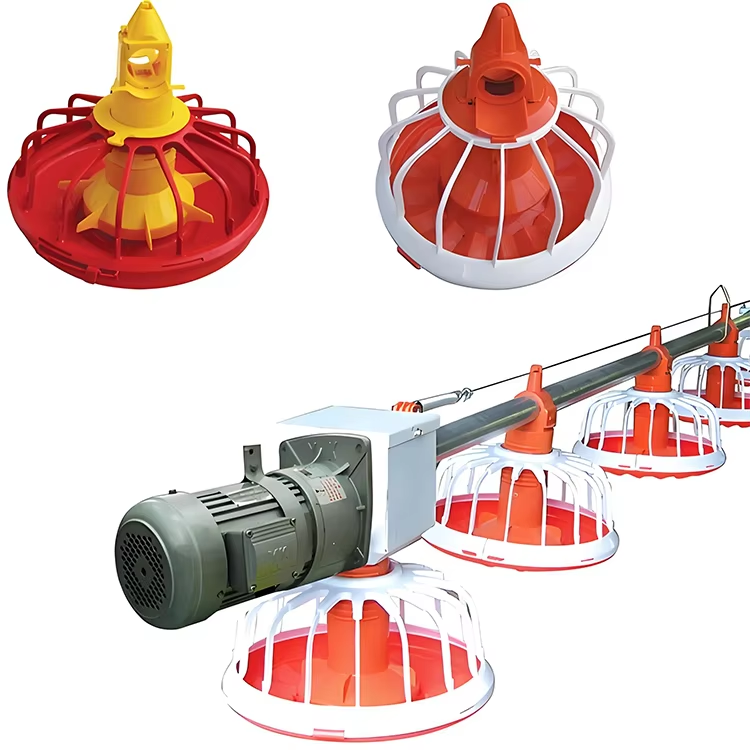
Poultry farms worldwide face acute shortages of reliable workers—especially for physically demanding tasks like carrying feed sacks and scraping manure. Automated systems directly address this gap. An automatic poultry feeder, synchronized with precision dispensers, delivers a full daily ration to 10,000 birds in under 30 minutes without human intervention. Complementing this, egg collection belts transport eggs gently to a central grading area, while manure removal belts clear waste multiple times daily beneath the cages. Together, these integrated solutions reduce required staffing by 50–70%, enabling operations with just one or two technicians instead of a crew of six. The result is not only lower labor costs but also operational continuity—eliminating production losses due to absenteeism—and greater resilience against demographic shifts in rural labor markets.
Improved Feed Conversion and Waste Reduction via Automatic Poultry Feeder Integration
Precision feeding algorithms boosting FCR by 8–12% (FAO, 2023)
Integrating an automatic poultry feeder with precision feeding algorithms transforms feed efficiency. Instead of uniform rations, these systems dispense exact portions tailored to flock age, weight, and production phase—guided by real-time sensor data. This targeted nutrition improves feed conversion ratio (FCR), the key metric for how efficiently feed converts to eggs or body mass. According to the Food and Agriculture Organization (FAO, 2023), farms adopting algorithmic feeding achieve an 8–12% FCR improvement. Gains stem from eliminating manual guesswork and aligning nutrient delivery with circadian consumption patterns—helping birds reach market weight faster or sustain higher lay rates with less feed. Automated record-keeping further enables continuous fine-tuning, creating compounding efficiency gains across successive flocks.
Real-time feed monitoring and spillage prevention cutting waste by up to 15%
Manual feeding often results in 10–25% feed waste due to spillage, overfilling, and trough scattering. An automatic poultry feeder with real-time monitoring tackles this directly: sensors detect consumption rates and instantly adjust auger speed or pan levels to prevent excess accumulation. System alerts notify operators of clogs or equipment displacement—minimizing spoilage and stale feed rejection. By maintaining just-in-time delivery, it reduces feed waste by up to 15%, even using conservative estimates. Since feed accounts for 60–70% of total production costs, this reduction delivers substantial savings. Combined with improved FCR, it increases output per kilogram of feed—boosting profitability while lowering the environmental footprint of poultry operations.
Enhanced Poultry Health and Disease Prevention Through Environmental Automation
Automated environmental control systems are redefining poultry health management by maintaining optimal in-house conditions around the clock. These systems continuously adjust air quality, temperature, and humidity—directly reducing stressors that trigger respiratory disease and production losses.
Ammonia reduction (30–50%) and smart ventilation lowering respiratory disease incidence
Ammonia buildup from litter is a primary cause of respiratory damage and secondary infections in confined flocks. Automated manure removal belts cut ammonia concentrations by 30–50% by removing waste before decomposition begins (Poultry Science, 2023). Smart ventilation systems then use real-time ammonia and CO₂ sensors to calibrate airflow—maintaining concentrations below 10 ppm, the threshold for mucosal irritation. A study of 40 layer houses found automated ventilation and scraper systems reduced respiratory disease incidence by 4.2 percentage points versus manually managed houses. This protection is especially critical during high-density cycles, where even brief ammonia spikes can cause lasting lung damage—lowering medication costs, mortality, and reliance on manual intervention.
IoT-based environmental monitoring enabling proactive health interventions
IoT-enabled sensors collect continuous data on temperature, humidity, ammonia, light, and even bird vocalizations—feeding into cloud-based dashboards. Machine learning algorithms analyze this stream to detect early deviations—such as rising ammonia or declining feeding activity—that often precede clinical disease. In one large-scale broiler integration, an IoT system flagged a 2-hour ventilation failure before any symptoms appeared, enabling timely correction and preventing a potential outbreak. By integrating data from automatic feeders and water lines, the platform identifies subtle behavioral shifts—like reduced feed intake—that signal subclinical illness. This predictive capability supports targeted, proactive responses—adjusting ventilation, isolating pens, or modifying nutrition—rather than reactive treatment. Farms employing such systems report a 20–25% reduction in disease incidence and antibiotic use (Agri-Tech, 2024), transforming environmental control from static setpoints into a dynamic, health-focused strategy.
Higher Egg Production and Better Animal Welfare Outcomes
Automated chicken cage systems harmonize environmental control to deliver a dual benefit: measurable gains in egg output and demonstrable improvements in hen welfare. By maintaining optimal temperature, humidity, and lighting cycles, they remove physiological stressors that suppress laying and trigger harmful behaviors—making peak performance and humane care complementary goals.
Stable environment increasing peak lay rates by 5–7% and extending productive lifespan
Precision climate management eliminates fluctuations that disrupt laying rhythms. An automatic poultry feeder reinforces stability by delivering consistent, personalized nutrition at scheduled intervals—reducing competition and calming the flock. Industry data show that farms using full-spectrum automation achieve a 5–7% increase in peak lay rates and often extend productive cycles by up to two weeks. A controlled environment also minimizes energy waste from heat or cold stress—redirecting metabolic resources toward egg formation. This synergy of steady feeding, optimized airflow, and regulated lighting sustains higher daily output while prolonging the hen’s economically viable lifespan—improving return on flock investment.
Reduced stress and feather pecking supporting welfare compliance and market differentiation
Automated housing curtails stress-induced behaviors like feather pecking and cannibalism by removing resource competition and ensuring uniform conditions. A Poultry Science Association study found a 65% reduction in footpad lesions and significantly lower ammonia exposure in automated environments. These outcomes align with leading welfare certification standards—including those of the Global Animal Partnership and RSPCA—and meet rising consumer expectations. Producers leveraging automation gain verifiable evidence of ethical stewardship—enabling brand differentiation in premium retail and foodservice channels without compromising productivity.
FAQ
What are the main benefits of using automated chicken cage systems?
Automated chicken cage systems significantly reduce labor costs by automating processes like feeding, egg collection, and manure removal. They also improve feed conversion rates, minimize waste, enhance poultry health, and support better animal welfare standards.
How much can automation reduce daily labor?
Automation reduces routine labor by 40–65%, cutting the time spent on tasks like feeding and manure removal from around 18 hours to 6–8 hours per day in a 10,000-bird operation.
How do automated systems improve feed conversion ratios?
Systems equipped with precision feeding algorithms ensure tailored nutrition for flocks, boosting feed conversion ratios by 8–12% through real-time data-driven adjustments.
What role does IoT play in automated poultry farming?
IoT sensors monitor factors like temperature, humidity, and bird activity, enabling real-time adjustments to maintain optimal conditions and reduce disease incidence by up to 25%.
Can automation improve animal welfare?
Yes, automated systems ensure a stable and stress-free environment, reducing harmful behaviors like feather pecking and meeting welfare certification standards, thereby supporting ethical farming practices.