
 EN
EN
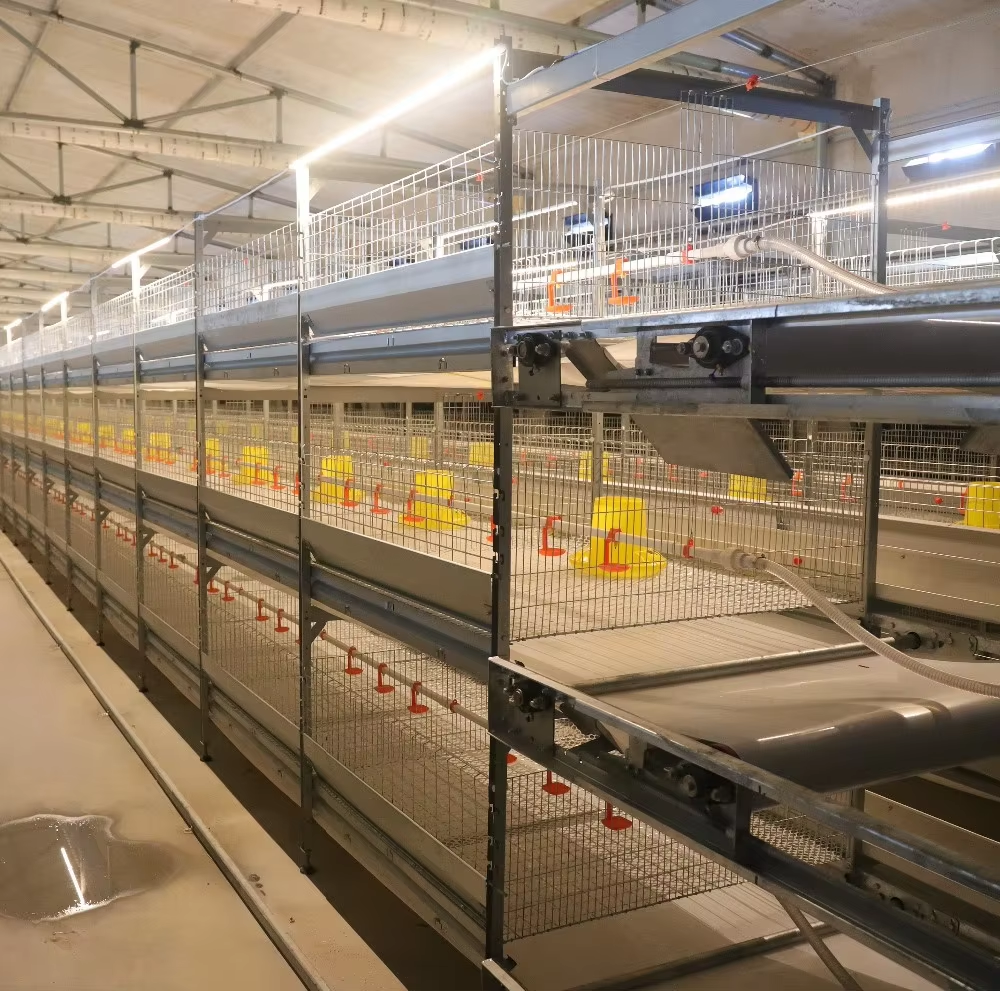
How Galvanized Steel Combats Corrosion in Poultry Housing
Ammonia, Moisture, and Manure: Key Corrosion Drivers in Chicken Cage Environments
Poultry housing environments present unique corrosion challenges. High ammonia concentrations from accumulated manure, persistent moisture from drinking systems and routine washing, and acidic manure residues form a highly aggressive chemical triad. These agents accelerate electrochemical oxidation of unprotected steel—often reducing service life to just 2–5 years. Chlorine-based disinfectants, widely used in biosecurity protocols, further intensify degradation by breaking down passive oxide layers and promoting pitting. Without robust protection, structural integrity, hygiene compliance, and operational continuity are all compromised.
Zinc Coating Science: Dual Protection Through Barrier Shielding and Cathodic Action
Galvanized steel combats this threat through two synergistic, metallurgically rooted mechanisms. First, the hot-dip galvanized (HDG) zinc coating forms a dense, impermeable barrier that physically isolates the base steel from corrosive agents—including ammonia vapors, condensate, and organic acids. Second, zinc serves as a sacrificial anode via cathodic protection: even if the coating is scratched during installation or cleaning, it preferentially corrodes to preserve the underlying steel. HDG achieves this through immersion in molten zinc (~450°C), forming intermetallic alloy layers with superior adhesion, hardness, and abrasion resistance compared to paint, epoxy, or electroplated alternatives. This dual-action defense is codified in ASTM A123 and ISO 1461 standards for durable corrosion protection in aggressive agricultural settings.
Operational Durability: Galvanized Steel Under Real-World Chicken Cage Stressors
Resisting Mechanical Wear from Daily Cleaning, Bird Activity, and Handling Equipment
Chicken cages endure relentless mechanical stress: pressure-washing, scraper use, bird pecking and scratching, and repeated impacts from feed carts and egg collection equipment. Galvanized steel excels here—not as a brittle surface coating, but as a metallurgically bonded, ductile layer. The outer pure-zinc eta layer provides initial abrasion resistance, while the underlying zeta and delta alloy layers absorb impact energy without cracking or delaminating. Unlike polymer coatings that chip or UV-degrade, the zinc-alloy structure flexes with the substrate under load, maintaining coverage over decades of operation. Field studies from commercial layer facilities in the U.S. Midwest and Southeast confirm minimal coating loss after 12+ years of daily high-pressure sanitation—resulting in fewer panel replacements and up to 60% lower long-term maintenance labor costs versus PVC-coated alternatives.
Maintaining Integrity Across Temperature Fluctuations in Ventilated or Open-Sided Chicken Cage Systems
In naturally ventilated or tunnel-ventilated poultry houses, cage structures face extreme thermal cycling—ranging from subfreezing winter nights to >40°C summer days. Such repeated expansion and contraction can fatigue joints, warp thin-gauge materials, and compromise coating adhesion. Galvanized steel performs reliably under these conditions: its coefficient of thermal expansion closely matches that of carbon steel, minimizing interfacial stress at the coating–substrate boundary. Critically, the HDG layer remains stable under UV exposure and wet-dry cycling—unlike organic coatings that chalk, fade, or blister. This dimensional stability preserves cage alignment, prevents sagging in multi-tier systems, and ensures consistent egg roll-out and bird mobility. Over time, it mitigates cumulative fatigue-related failures that commonly appear in non-galvanized or poorly coated systems after 7–10 years.
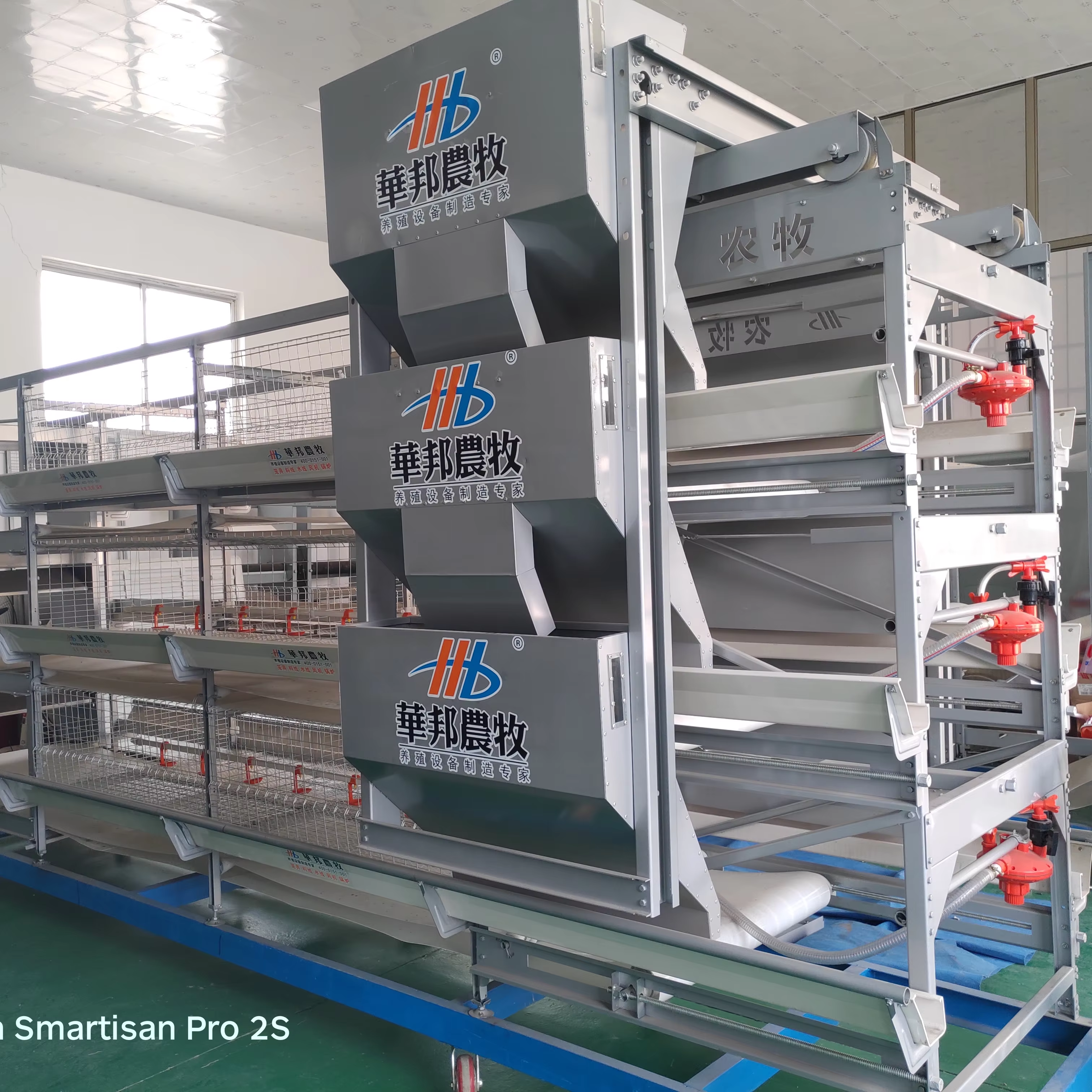
Service Life Comparison: Galvanized Steel vs. Common Chicken Cage Materials
Lifespan Data: Galvanized Steel Outperforms Mild Steel, PVC-Coated, and Stainless Steel in Cost-Adjusted Durability
Long-term performance data—aggregated from USDA ARS field trials, industry lifecycle assessments, and third-party audits across 18 U.S. and EU poultry operations—confirms galvanized steel’s leadership in cost-adjusted durability. Mild steel lasts only 2–5 years before rust compromises structural safety and hygiene; PVC-coated variants extend life to 5–10 years but suffer from edge chipping, UV embrittlement, and poor repairability. Stainless steel (e.g., 304 or 316) offers 20+ year service life but carries 3–5× the initial material cost and lacks the same abrasion resistance in high-wear zones like cage floors and support rails.
Hot-dip galvanized steel delivers a balanced 15–20 year service life in typical commercial layer and broiler breeder environments. Its 50–200 micron zinc coating resists both atmospheric corrosion and mechanical wear, with field measurements showing <10% thickness loss after 15 years in high-ammonia, high-humidity barns. When factoring in installation, maintenance, replacement, and downtime, galvanized systems demonstrate 40% lower total cost of ownership than stainless steel over two decades—and eliminate the full-system replacement cycles required with mild or PVC-coated options. For producers seeking proven longevity without premium material premiums, hot-dip galvanizing remains the most authoritative, standards-backed solution.
FAQ
What makes galvanized steel resistant to corrosion?
Galvanized steel has a zinc coating that acts as a protective barrier and provides cathodic protection, which means the zinc will corrode instead of the steel if the coating is scratched.
How long does galvanized steel typically last in poultry housing?
Galvanized steel typically lasts 15–20 years in poultry environments with regular maintenance, far longer than mild steel or PVC-coated variants.
Is galvanized steel more cost-effective than stainless steel?
Yes, galvanized steel offers up to 40% lower total cost of ownership over two decades compared to stainless steel, making it a more cost-effective option for poultry housing.
Can galvanized steel withstand extreme temperature fluctuations?
Yes, galvanized steel performs well under thermal cycling, maintaining its integrity across subfreezing to high-temperature conditions without cracking or delaminating.