
 EN
EN
Aligning Poultry Equipment with Farm Scale and Production Objectives
Matching Capacity to Stocking Density, Throughput Targets, and Growth Stages
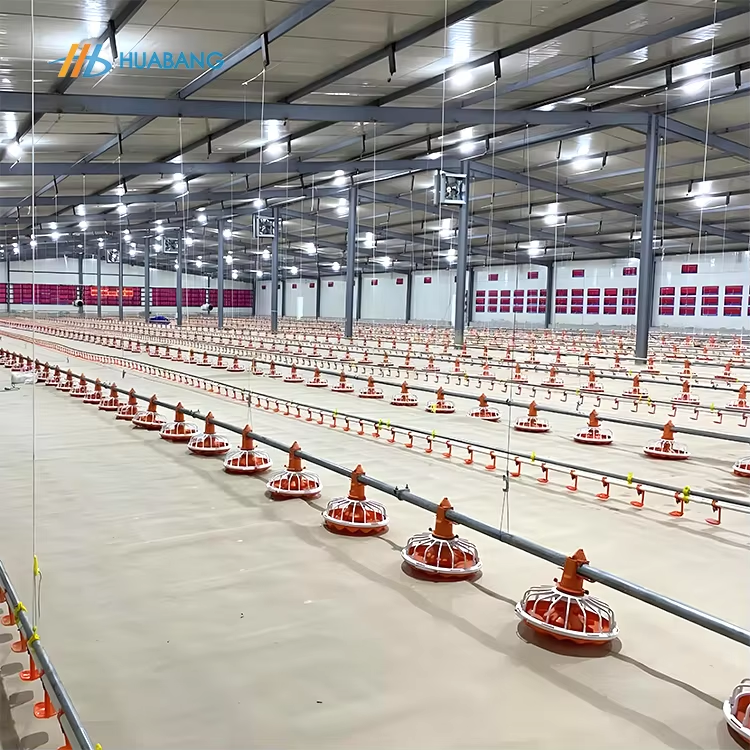
Choosing the right poultry equipment begins with a precise assessment of your farm’s scale and production goals. Stocking density—measured in birds per square meter or kg/m²—directly determines feeder and drinker capacity, ventilation requirements, and floor space allocation. Broiler operations targeting rapid growth demand high-throughput feeders to support daily intake peaks, while layer farms must provide one nest box per 4–5 hens to minimize floor eggs and stress. Equipment must also adapt across growth stages: brooding requires adjustable, low-height feeders and localized heat sources; grow-out phases call for automated, scalable systems that maintain uniform access and reduce labor dependency. Using manual feeders in high-density flocks, for example, invites competition, uneven weight gain, and elevated mortality—underscoring why alignment between equipment capacity and biological throughput is foundational to flock performance and profitability.
Small-Scale vs. Commercial-Scale Poultry Equipment Trade-Offs: Labor, Automation, and Future Scalability
The decision between manual and automated equipment hinges on current scale and strategic intent. Small-scale farms often start with low-cost manual feeders and bell drinkers—minimizing upfront investment but increasing labor intensity per bird. As flocks exceed 1,000 birds, this model becomes operationally fragile: labor consistency declines, feed wastage rises, and response time to environmental shifts slows. In contrast, commercial operations deploy chain feeders, nipple drinkers, and integrated climate control—cutting daily labor by up to 70% while improving feed conversion ratios (FCR) by 3–5%. Though automation entails higher capital outlay and specialized maintenance, modular designs now enable phased adoption: growers can begin with automated feeding and add ventilation or egg collection later. This scalability—paired with data-driven management tools—ensures equipment investments evolve alongside production volume, avoiding costly overhauls or performance bottlenecks.
Core Poultry Equipment Categories and Their Operational Impact
Housing Systems: Cages, Floor Housing, and Enriched Coops by Bird Type and Welfare Compliance
Housing is the operational and regulatory anchor of any poultry system—shaping bird welfare, labor efficiency, and long-term viability. Conventional cages maximize layer density but restrict natural behaviors like perching and dustbathing, prompting widespread transition toward enriched colony systems that comply with EU Directive 1999/74/EC and similar standards in Canada and New Zealand. Floor housing remains standard for broilers but demands rigorous litter management and ventilation to curb ammonia accumulation and footpad dermatitis. Mobile coops offer small-scale producers rotational grazing benefits—enhancing soil fertility and reducing parasite loads—while meeting growing consumer demand for pasture-raised claims. Regardless of scale, housing selection must reconcile three priorities: species-specific behavioral needs, compliance with evolving welfare legislation (e.g., USDA Animal Welfare Act guidelines for cage-free layers), and total cost of ownership—including bedding, cleaning, and replacement cycles.
Feeding, Watering, and Brooding Systems — From Manual to Smart Automated Poultry Equipment
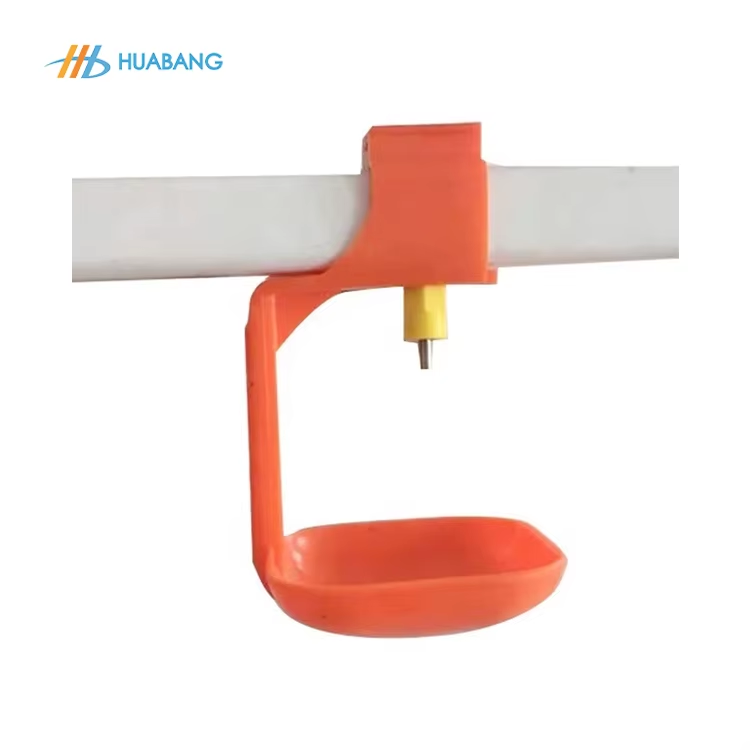
Feeding, watering, and brooding systems are where precision directly translates into biological efficiency. Manual bell drinkers and pan feeders persist in backyard and micro-farms, but their limitations—spillage, inconsistent access, temperature drift—are increasingly untenable amid tightening labor markets and rising feed costs. Modern automated solutions include auger-fed delivery with programmable portion control, low-pressure nipple drinkers that reduce water wastage by 40% and pathogen transmission risk, and infrared or gas brooders with AI-powered thermostats that adjust heat output based on real-time chick clustering behavior. When integrated with farm management software (e.g., FarmWizard), these systems log consumption trends, flag anomalies like blocked nipples or stalled augers, and auto-adjust rations by age or target weight. Medium and large farms report labor reductions of 25–30%, FCR improvements of 0.05–0.10 points, and faster flock uniformity—all within 12–18 months of implementation.
Species-Specific Poultry Equipment Configuration: Broilers, Layers, and Dual-Purpose Flocks
Broiler Equipment Priorities: Rapid-Growth Support, Litter Management, and Floor Space Optimization
Broiler success rests on equipment that actively supports metabolic intensity—not just accommodates it. Deep litter systems remain dominant, but their efficacy depends on continuous moisture control: circular or linear feeders with anti-spill lips keep bedding dry, while nipple drinkers positioned at optimal height prevent wet litter and associated respiratory challenges. Ventilation must match the 30–36 kg/m² stocking density common in modern broiler houses—requiring minimum air exchange rates of 1.5–2.0 m³/kg/hour to manage heat and humidity. Flooring layout also matters: slatted or perforated sections beneath feed lines improve airflow and ease cleanout. Crucially, equipment integration—not isolated components—drives outcomes: synchronized fan speed, heater output, and feed delivery ensures birds expend energy on growth, not thermoregulation. Farms implementing such coordinated systems consistently achieve FCRs below 1.50 and mortality under 4%, per 2023 U.S. Poultry & Egg Association benchmark data.
Layer Equipment Essentials: Nest Boxes, Egg Collection Systems, and Photoperiod-Controlled Lighting
Layer productivity hinges on equipment that aligns with avian biology and handling practicality. Nest boxes—whether roll-away trays in cages or soft-floor compartments in aviaries—must be dark, secluded, and easily accessible to encourage laying in designated areas and cut floor eggs by up to 90%. Automated belt collection systems then transport eggs gently to grading stations, reducing breakage to <1% and cutting labor by 50% versus manual gathering. Photoperiod control is equally non-negotiable: hens require 14–16 hours of consistent, gradually dimmed light daily to sustain peak lay rates. Programmable LED lighting systems—such as those certified by the American Humane Certified™ program—mimic natural sunrise/sunset transitions, lowering stress-induced cannibalism and sudden flight responses. In cage-free systems, perch spacing (minimum 15 cm/bird) and slatted flooring further enhance hygiene and uniformity. Together, these elements form a closed-loop system where equipment design directly sustains both hen health and economic output.
Environmental Control and Biosecurity Integration in Poultry Equipment Design
Ventilation, Temperature, and Humidity Systems: Tunnel vs. Cross-Ventilation ROI by Climate Zone
Ventilation strategy must be climate-responsive—not prescriptive. Tunnel ventilation excels in hot-humid zones (e.g., Southeastern U.S., Southeast Asia), delivering high-velocity airflow that lowers effective temperature through wind-chill and rapidly evacuating moisture and CO₂. Cross-ventilation performs more efficiently in temperate or cold regions (e.g., Pacific Northwest, Northern Europe), distributing air evenly without excessive heat loss—and enabling integration with heat recovery units that reclaim up to 70% of exhaust thermal energy. Both approaches rely on smart sensors maintaining relative humidity between 50–70% and temperature bands tailored to growth stage (e.g., 32–35°C at placement, tapering to 18–22°C by market age). Farms deploying IoT-enabled controllers—like those from Big Dutchman—report ROI within 18–24 months via reduced mortality (2–3% lower), improved FCR (0.03–0.06 points), and extended equipment lifespan through predictive maintenance alerts.
Manure Handling and Hygiene-Centric Features: Automated Scrapers, Belt Systems, and Disinfection-Ready Materials
Effective manure management is biosecurity infrastructure—not waste logistics. Automated scrapers remove fresh manure every 2–4 hours in broiler houses, curbing ammonia spikes and coccidia oocyst buildup; in multi-tier layer barns, manure belts dry excreta during transit, yielding drier, easier-to-store material with lower pathogen load. These systems integrate seamlessly with disinfection protocols when built with smooth, non-porous surfaces (e.g., stainless steel frames, powder-coated aluminum) and corrosion-resistant fasteners that withstand repeated exposure to quaternary ammonium and hydrogen peroxide-based disinfectants. Entry hygiene is reinforced by automated boot scrubbers and fogging stations at all personnel access points, while MERV-13 or HEPA filtration on incoming air prevents airborne pathogen recirculation. When linked to centralized farm software, these features generate audit-ready logs for third-party certifications (e.g., Global Animal Partnership Step 3+, SQF Code Edition 9), turning hygiene from a compliance task into a measurable operational advantage.
FAQ
What factors should I consider when choosing poultry equipment?
Choose equipment based on your farm's scale, stocking density, bird type, and production goals. Consider alignment with growth stages, regulatory compliance, and future scalability.
Should small-scale farms invest in automated equipment?
Automated equipment may be unnecessary for small farms with fewer than 1,000 birds due to its higher cost. However, as operations grow, automation can improve efficiency, reduce labor intensity, and lower feed waste.
How does housing type affect bird welfare and productivity?
Housing directly impacts bird welfare and productivity. Conventional cages maximize density but restrict natural behavior, while enriched systems or floor housing promote welfare and sustainability.
Why is ventilation crucial in poultry farming?
Ventilation controls temperature, humidity, and air quality, ensuring bird health and optimizing growth performances. Climate-specific ventilation systems like tunnel or cross-ventilation can boost productivity and reduce illness.
What are the benefits of automated feeding and watering systems?
Automated systems improve feed conversion ratios, reduce labor costs, minimize spillage, ensure consistency in feed portions, and can be integrated with farm management software for efficiency.
Table of Contents
- Aligning Poultry Equipment with Farm Scale and Production Objectives
- Core Poultry Equipment Categories and Their Operational Impact
- Species-Specific Poultry Equipment Configuration: Broilers, Layers, and Dual-Purpose Flocks
- Environmental Control and Biosecurity Integration in Poultry Equipment Design
- FAQ