
 EN
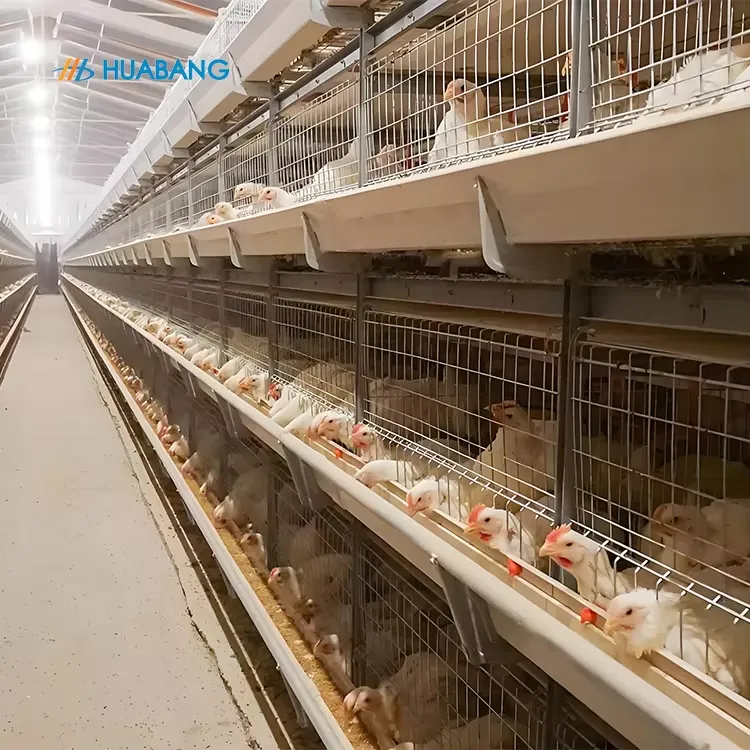
Enhanced Production Efficiency Through Advanced Poultry Cage Design
Improving feed conversion ratio (FCR) by up to 8% with precision-engineered poultry cage layouts
Precision-engineered poultry cage layouts significantly improve feed conversion ratio (FCR)—a critical metric for commercial efficiency. By optimizing feeding station placement and limiting unnecessary movement, these systems reduce feed spillage, minimize energy spent on competition, and ensure consistent nutrient access. A controlled meta-analysis across layer and broiler operations (Journal of Applied Poultry Research, 2022) found FCR improvements of up to 8% versus conventional floor housing. Multi-tier configurations enhance this further: integrated automated feeding lines deliver rations at precise intervals, stabilizing daily intake patterns and lowering metabolic stress. The result is more efficient nutrient utilization—especially with energy-dense diets—yielding higher output per unit of feed without proportional increases in consumption.
Boosting broiler weight gain 5–7% via optimized microclimate control and reduced stress in poultry cage environments
Broilers housed in climate-optimized cage systems gain 5–7% more weight on average than those in open-sided or poorly regulated environments, according to a 2023 industry trial. Real-time sensor networks adjust ventilation and cooling to maintain birds within their thermoneutral zone—reducing heat stress and cortisol-driven metabolic inefficiencies. Physical separation within cages also lowers social stress by eliminating large-flock dominance hierarchies, decreasing energy expenditure on pecking and aggression. This supports more efficient nutrient partitioning toward muscle deposition. Complementing this, dimmable LED lighting synchronized with feeding schedules promotes steady intake and minimizes panic responses. Together, these features create a stable, low-stress environment that accelerates growth, improves flock uniformity, and strengthens hatchery-to-slaughter performance.
Disease Mitigation and Biosecurity Strengthened by Poultry Cage Infrastructure
Pathogen reduction through physical isolation, minimized bird-to-bird contact, and integrated automated biosecurity features
Poultry cage systems serve as a foundational biosecurity tool by physically isolating birds into small, discrete units. Manure drops immediately through slatted floors—breaking the fecal-oral transmission cycle responsible for Salmonella and Coccidiosis outbreaks. Reduced inter-bird contact further curbs injury-related sepsis and aggressive behaviors, lowering antibiotic dependency. Integrated automation—including self-cleaning drinking lines, antimicrobial steel coatings, and continuous manure belts—prevents biofilm buildup and eliminates bacterial reservoirs. Automated ventilation consistently removes ammonia-laden air, safeguarding respiratory health. Between flocks, power-washing and fumigation are faster and more effective due to standardized, accessible surfaces. Fewer feed and waste accumulations also suppress vectors like flies and rodents. Collectively, these features reduce disease incidence, mortality, and operational vulnerability—building long-term farm resilience.
Operational Economics: Labor Savings, Long-Term ROI, and Scalability of Poultry Cage Systems
40–60% labor cost reduction enabled by automation-ready poultry cage systems for feeding, egg collection, and manure management
Modern poultry cage systems fundamentally restructure labor use—not just reducing headcount, but elevating workforce roles from manual handling to system oversight. Automation-ready designs streamline three core functions: precision feeding, timed egg collection, and continuous manure removal. Medium-level systems combining automatic feeding with manual manure scraping achieve up to 60% annual labor reduction. Fully automated setups—including environmental controls and integrated handling—report labor cost reductions exceeding 76%, according to a 2023 industry integration report. These gains compound with secondary benefits: cleaner environments lower disease pressure, while consistent egg collection improves bird welfare and production stability—moderate-scale operations note a 4.7% drop in mortality. Payback periods typically fall between 2–3 years, driven by direct labor savings and efficiency uplifts. As confirmed by leading manufacturers, full automation can push labor reduction beyond 90%, decoupling flock expansion from linear staffing growth.
Lifecycle ROI analysis: galvanized steel vs. stainless composite poultry cage materials over 10-year operational cycles
Evaluating poultry cage infrastructure solely on upfront cost overlooks long-term value. A 10-year lifecycle ROI analysis reveals hot-dip galvanized steel as the most economically balanced option for most commercial operations. Though it carries a 15–20% premium over basic steel, its service life effectively triples—with no major refurbishment required—and its hygiene compatibility supports sustained performance. Its modular design enables vertical stacking (3–5 tiers) and scalable expansion—from 5,000 to 50,000 birds—without replacing core structural components. In contrast, stainless composite materials offer excellent corrosion resistance but demand a 40%+ capital premium over galvanized steel, extending payback periods beyond typical industry thresholds. Their advantage is largely confined to extreme environments (e.g., high-salinity coastal zones or aggressive disinfectant regimes). For the majority of producers, galvanized steel delivers optimal durability, sanitation, and financial predictability—making it the pragmatic choice for scalable, high-ROI growth.
Strategic Selection of Poultry Cage Systems Based on Farm Scale and Production Goals
Choosing the right poultry cage configuration is a strategic decision—directly influencing flock health, labor efficiency, and long-term profitability. The optimal system must align with current scale, target output, and growth trajectory. For layer farms under 10,000 birds, semi-automatic A-type cages provide an accessible entry point—balancing lower capital outlay with manageable manual input. As flocks expand into the 30,000–60,000 range, fully automated H-type (battery) systems deliver clear advantages: higher stocking density and seamless integration of feeding, egg collection, and manure management slash per-bird operating costs. The table below reflects a widely adopted selection framework:
| Farm Scale (Layers) | Recommended Cage Type | Suggested Automation Level |
|---|---|---|
| 5,000 – 10,000 | 3‑tier A‑type | Semi‑automatic |
| 10,001 – 30,000 | 4‑tier A‑type | Semi or full automatic |
| 30,001 – 60,000 | 4–6 tier H‑type | Fully automatic |
| Above 60,000 | 6–8 tier H‑type | Intelligent automation |
Production goals further refine selection. Farms prioritizing egg quality may adopt enriched colony systems with perches and nesting areas; those maximizing output per square foot often choose high-density H-type layouts. Climate matters too: in hot regions, cage structures must support cross-ventilation and low-profile stocking to prevent heat stress. Forward-looking operations should also verify compatibility with future upgrades—such as IoT-based monitoring—to avoid costly retrofits. Ultimately, alignment between farm scale, objectives, and technical capability determines whether the cage investment becomes a catalyst for sustainable growth—or a limiting constraint.
FAQ
Why are precision-engineered poultry cages recommended for improving feed conversion ratio?
Precision-engineered cages optimize feeding station placement and minimize unnecessary movement, reducing feed spillage and ensuring consistent nutrient access. This leads to better nutrient utilization and energy conservation, improving FCR by up to 8%.
How do poultry cage systems enhance broiler weight gain?
Optimized systems manage microclimates using sensor-controlled ventilation and cooling, reducing stress. Physical separation decreases aggression, and dimmable lighting synchronized with feeding schedules promotes steady nutrient intake, boosting broiler weight gain by 5–7%.
What biosecurity advantages do poultry cage systems provide?
Poultry cages isolate birds and ensure quick manure removal, breaking fecal-oral disease cycles and reducing inter-bird contact. Automation tools like self-cleaning drinking lines and antimicrobial surfaces further fortify biosecurity.
How can poultry cage systems save labor costs?
Automation-ready cages streamline feeding, egg collection, and manure management, cutting labor requirements by up to 60–90%. This boosts operational efficiency and reduces long-term staffing costs.
What factors should be considered when choosing a poultry cage system?
Factors include farm scale, production plans, climate, and future upgrades. Compatibility with IoT-based systems and alignment with farm objectives determine the best investment for scalable growth.
Table of Contents
- Enhanced Production Efficiency Through Advanced Poultry Cage Design
- Disease Mitigation and Biosecurity Strengthened by Poultry Cage Infrastructure
- Operational Economics: Labor Savings, Long-Term ROI, and Scalability of Poultry Cage Systems
- Strategic Selection of Poultry Cage Systems Based on Farm Scale and Production Goals
-
FAQ
- Why are precision-engineered poultry cages recommended for improving feed conversion ratio?
- How do poultry cage systems enhance broiler weight gain?
- What biosecurity advantages do poultry cage systems provide?
- How can poultry cage systems save labor costs?
- What factors should be considered when choosing a poultry cage system?