
 EN
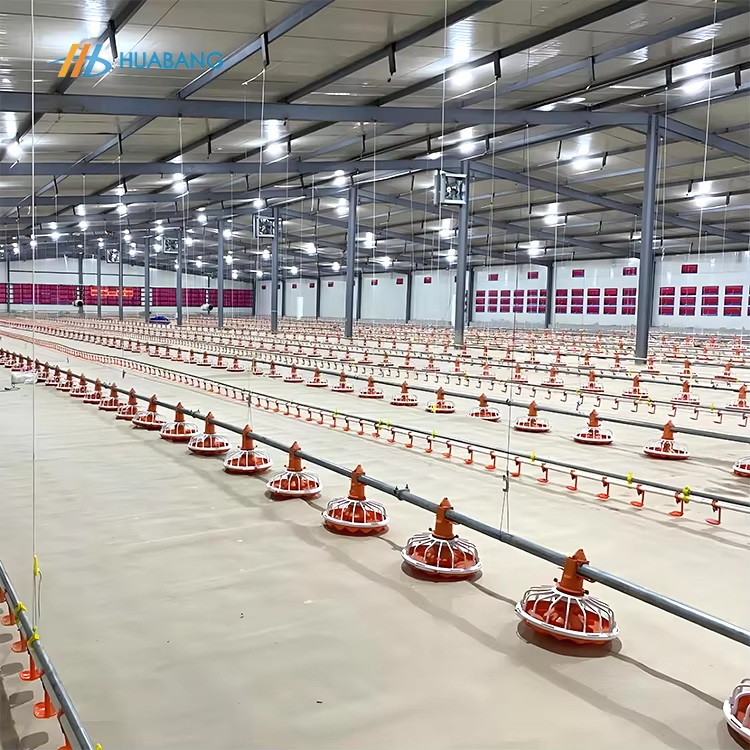
What Precision Breeding Means in Modern Poultry Production
Precision breeding in modern poultry production represents a fundamental shift—from reactive, flock-level management to proactive, individual-bird optimization. At its core, this approach relies on intelligent poultry equipment: integrated systems of IoT sensors, automated climate controllers, and real-time biometric monitors that capture granular data on feed intake, weight gain, activity, and health status. By dynamically adjusting each bird’s micro-environment to match its genetic potential, producers move beyond average-based feeding and mating decisions. Genomic selection is no longer applied in isolation; elite breeding stock are housed in environments where every variable—from ammonia concentration to light spectrum—is continuously tuned. This convergence of genetics, sensor technology, and automation ensures superior traits are expressed consistently. The result is a breeding program that improves feed conversion, cuts mortality, shortens trait-expression lag, and delivers unprecedented flock uniformity. In effect, intelligent poultry equipment enables a closed-loop system—data flows from bird to breeder and back—turning poultry houses into precision-biology platforms that elevate both productivity and welfare.
Core Intelligent Poultry Equipment Technologies Driving Precision Breeding
Modern intelligent poultry equipment forms the backbone of precision breeding by integrating real-time sensing, automation, and advanced analytics. Two pillars—IoT sensor networks and computer vision systems—work together to capture the environmental and behavioural data essential for accurate selection and management.
IoT Sensor Networks for Real-Time Microclimate and Welfare Monitoring
IoT sensor networks are deployed throughout poultry houses to continuously monitor critical microclimate parameters: air temperature, relative humidity, ammonia concentration, carbon dioxide levels, and light intensity. These sensors feed data into central platforms that automatically trigger ventilation, heating, or cooling adjustments—maintaining optimal conditions second by second. Equally important, the same networks track welfare-related indicators—bird movement, vocalisations, and drinking patterns—using accelerometers, sound sensors, and flow meters. Sudden deviations from baseline behaviour—such as reduced feeding activity or increased anxiety calls—act as early-warning signals for heat stress, respiratory disease, or management failures. This proactive system corrects environmental drift before performance declines, lowering mortality, improving feed conversion, and delivering the stable conditions essential for precise genetic evaluation.
Computer Vision and AI for Automated Behavior Analysis and Embryo Viability Scoring
Computer vision and deep learning add a visual layer of intelligence to poultry equipment. Cameras placed in barns or hatcheries capture high-resolution images that algorithms analyse to detect subtle behavioural changes—lameness, feather pecking, or floor-egg laying—without human intervention. In breeding operations, the same technology enables non-invasive embryo viability scoring: imaging assesses embryo development through the shell, allowing hatcheries to remove non-viable eggs early in incubation. This reduces wasted incubator space, increases hatchability, and supports ethical goals by avoiding the incubation of eggs that will never hatch. Automated behaviour analysis also provides objective, round-the-clock records of individual or group activity—replacing sporadic manual checks. When fused with IoT sensor data, computer vision creates a rich data stream that helps geneticists correlate environmental stressors with performance traits, ultimately driving more accurate selection for robustness and productivity.
Data Integration: Linking Genomics, Environment, and Performance Metrics
The true power of precision breeding emerges when isolated data streams are fused into a unified analytical framework. Intelligent poultry equipment generates continuous environmental logs—temperature, humidity, ammonia, and light intensity—via IoT sensors, while genomic screening provides a bird’s genetic blueprint. Simultaneously, automated feeding and weighing stations capture individual feed intake, growth curves, and egg production data. These heterogeneous datasets—often siloed in legacy systems—must be aggregated into a central platform where genotype, environment, and phenotype can be meaningfully correlated. For instance, a high-genetic-merit bird may underperform under suboptimal ventilation—a correlation invisible without integrated analytics. Modern software dashboards allow producers to trace performance metrics back to specific genetic lines under controlled environmental conditions, enabling data-driven selection of parent stock that thrives in their particular production ecosystem. This convergence transforms poultry equipment from simple monitoring tools into strategic assets for accelerating genetic gain.
Proven Impact: Economic Gains and Ethical Advantages of Intelligent Poultry Equipment
Intelligent poultry equipment transforms farm economics and animal welfare simultaneously. Automated climate control and feeding systems cut labor costs by up to 40% while optimizing feed conversion ratios, saving an average of $0.12 per bird (Industry Benchmark 2024). Real-time health monitoring reduces mortality rates through early disease detection—preventing losses that average 5–8% in conventional farms. Ethically, such equipment ensures consistent environmental conditions, reducing stress and behavioural issues. Precision breeding, powered by integrated data, further boosts flock uniformity—elevating product quality. These technologies enable precise management that aligns profit with ethical responsibility—delivering lower input costs and higher bird survival rates.
Case Evidence: 22% Culling Reduction in Dutch Hatchery via AI-Enabled Sexing and Scoring
A 2023 pilot at a major Dutch hatchery integrated AI-powered in-ovo sexing and embryo viability scoring into its poultry equipment line. Using computer vision to determine sex and health status before hatching, the system avoided incubating non-viable eggs and male chicks destined for culling. The result was a 22% reduction in day-old chick culling—directly cutting ethical concerns and disposal costs. By replacing manual inspection, the technology also standardized quality control. The hatchery reported improved hatch rates and achieved a measurable ROI within one production cycle, demonstrating how intelligent poultry equipment can merge economic gain with higher welfare standards.
FAQ
What is precision breeding in poultry production?
Precision breeding involves optimizing individual birds’ environments to ensure their genetic potential is achieved. This approach uses IoT sensors, genomic insights, and automation to improve feed efficiency, uniformity, and animal welfare.
How do IoT sensors contribute to precision breeding?
IoT sensors continuously monitor and adjust key microclimate parameters like temperature, humidity, and light intensity, ensuring optimal conditions for poultry growth and welfare while enabling predictive issue management.
How does computer vision impact poultry breeding?
Computer vision allows automated analysis of bird behavior and embryonic viability, reducing waste, improving hatchability, and enabling ethical practices such as non-invasive egg evaluation.
Why is data integration important in precision breeding?
Data integration fuses environmental, genomic, and performance data into unified dashboards, helping producers understand correlations between traits and conditions to make better breeding and management decisions.
What are the economic benefits of using intelligent poultry equipment?
Intelligent poultry equipment reduces labor costs, improves feed conversion ratios, decreases mortality rates, and ensures consistency, delivering measurable savings and improving animal welfare simultaneously.