
 EN
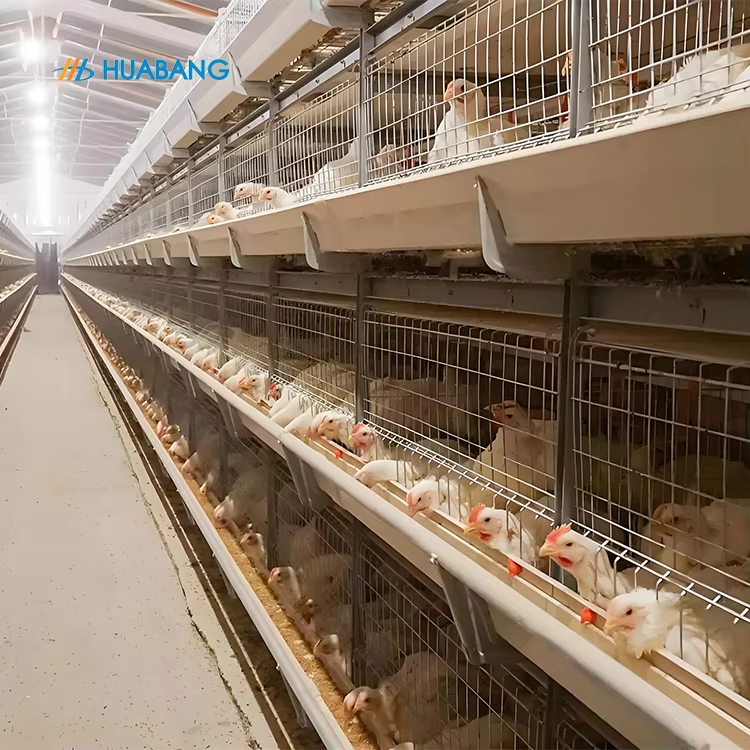
Labor and Time Savings with Semi-Automatic Poultry Cages
Reduction in Daily Manual Labor Requirements
Manual poultry care involves repetitive, physically demanding tasks: scooping feed, refilling waterers, scraping manure, and checking nest boxes. Semi-automatic poultry cages automate these high-frequency chores—using hoppers for timed feeding, nipple drinkers for continuous water access, and belt or scraper systems for scheduled manure removal. In conventional floor systems, one worker may spend 2–3 hours daily on feeding and litter management for a few hundred birds; automation slashes this burden significantly. A 2023 study published in the Poultry Management Journal found that semi-automatic systems save an average of 12.7 labor hours weekly per 500 birds—equivalent to $18,400 in annual labor savings for mid-sized operations. For small-scale farms, this frees up family labor or hired help for higher-value activities like health monitoring, egg grading, and recordkeeping. The elevated cage design also reduces physical strain from bending, lifting feed bags, and handling wet litter. Because daily routines become more predictable, farms can operate with fewer workers—or reallocate labor toward growth. For part-time farmers or those balancing off-farm jobs, this efficiency can be the deciding factor in sustaining flock operations. Over time, reduced fatigue lowers error rates and improves consistency in care, while standardized tasks simplify onboarding for new staff.
Time Efficiency Gains in Feeding, Watering, and Manure Removal
Automating the three most labor-intensive daily tasks—feeding, watering, and manure removal—delivers measurable, cumulative time savings. Semi-automatic systems typically integrate adjustable-flow feed hoppers, low-maintenance nipple or cup drinkers, and timer-controlled manure belts or scrapers. According to the 2024 Poultry Automation Report, farms using such systems cut labor hours per 1,000 birds from 18 to 7.2—a 60% reduction. Feeding becomes precise and hands-off: portion-controlled hoppers eliminate overfilling and repeated trips. Nipple drinkers maintain constant water access without daily scrubbing or refills. Manure belts run on schedule, reducing bedding replacement frequency and eliminating manual scraping. These efficiencies are especially valuable on small farms where the owner handles most duties—freeing mornings for bird inspections, ventilation adjustments, or egg grading. Timers and flow controls also minimize overfeeding and spillage, cutting cleanup time. Integrated monitoring in automated drinkers helps detect clogs or leaks early, preventing disruptions. Critically, the time saved supports phased expansion without requiring additional labor.
| Task | Manual Routine | Semi-Automatic Routine |
|---|---|---|
| Feeding | Scoop and distribute feed 2–3 times daily | Timer-controlled hoppers portion feed |
| Watering | Refill and clean open drinkers | Nipple drinkers maintain water flow |
| Manure removal | Hand scrape litter every 1–2 days | Belt or scraper runs on schedule |
Overall, time efficiency from automating core tasks enhances both operational speed and consistency in flock management—without compromising responsiveness or oversight.
Enhanced Poultry Health and Welfare from Semi-Automatic Poultry Cages
Lower Pathogen Exposure via Elevated, Litter-Free Housing
Semi-automatic poultry cages elevate hens above the ground, separating them from litter, pooled water, and accumulated droppings. This litter-free, slatted or wire-floor housing minimizes direct contact with pathogens like Salmonella, E. coli, and coccidia. Without access to contaminated bedding, birds avoid scratching and pecking in waste—reducing parasite transmission and footpad lesions. Manure falls through the floor into collection trays, and semi-automatic removal systems clear it regularly, keeping ammonia levels low and respiratory irritation minimal. This passive biosecurity—combined with reduced bird-to-bird contact—limits disease spread within the flock. Industry data from 2023 shows moderate-scale operations using stacked layer cages with automated feeding recorded a 4.7% lower mortality rate than comparable floor systems. The result is a consistently drier, cleaner environment that supports stronger immune function—delivering meaningful welfare and health benefits for small farms without the labor intensity of deep-litter management.
Improved Ventilation, Temperature Control, and Stress Reduction
Semi-automatic systems support stable environmental conditions through integrated sensors and responsive ventilation. These monitor air quality, temperature, and humidity—and automatically adjust airflow to remove excess heat, moisture, and ammonia. Birds experience fewer thermal fluctuations, lowering heat stress in summer and cold stress in winter. Stable climate conditions reduce cortisol levels, supporting calmer, more productive flocks. Predictable feeding and watering schedules further reinforce routine, helping hens conserve energy for egg production rather than coping with discomfort. Industry reports indicate a 48% improvement in egg production consistency when stable climate control and automated resource delivery are used. Stress-related behaviors—including feather pecking and excessive vocalization—decline noticeably. Even moderate automation maintains fresher air and lower moisture, which naturally suppresses harmful microbial growth. For small-scale farmers, these improvements translate directly to healthier birds, lower mortality, more uniform egg quality, and less daily intervention.
Scalable, Cost-Effective Adoption for Small-Scale Farms
Modular Design Enables Phased Investment and Expansion
Modular semi-automatic poultry cage systems offer small-scale farms a realistic, low-risk path to automation. Instead of committing to a full-capacity setup upfront, farmers can begin with one or two cage blocks—validate labor savings and performance gains—and scale incrementally as flock size and income grow. Each module includes its own feeding, watering, and manure belt connections, so expansion rarely disrupts existing infrastructure or requires system-wide overhauls. This phased approach spreads capital investment across multiple seasons, preserves cash flow during market volatility or disease outbreaks, and reduces dependence on large loans. A small operation might start with 500 layers and later expand to 2,000 birds using the same structural frame, control interface, and maintenance protocol. That flexibility makes semi-automatic cages a uniquely accessible entry point—more scalable than conventional floor systems and more affordable than fully automatic alternatives.
FAQ
Q: What are the main benefits of semi-automatic poultry cages?
A: Semi-automatic poultry cages offer labor savings, time efficiency, improved poultry health, better ventilation, and a phased investment approach for scalability.
Q: How do semi-automatic systems improve poultry health?
A: Elevated, litter-free housing minimizes pathogen exposure while automated manure removal and ventilation systems create consistent, clean living conditions for improved immune function.
Q: Are semi-automatic systems suitable for small-scale farms?
A: Yes, modular designs are ideal for small-scale farms, allowing incremental investments while ensuring compatibility with growing flock sizes.
Q: How much labor time can semi-automatic cages save?
A: According to studies, semi-automatic systems can save 12.7 labor hours weekly per 500 birds, reducing manual effort significantly.
Q: Can semi-automatic systems improve egg consistency?
A: Yes, stable climate control and automated feeding schedules enhance egg production consistency by reducing stress and promoting routine.