
 EN
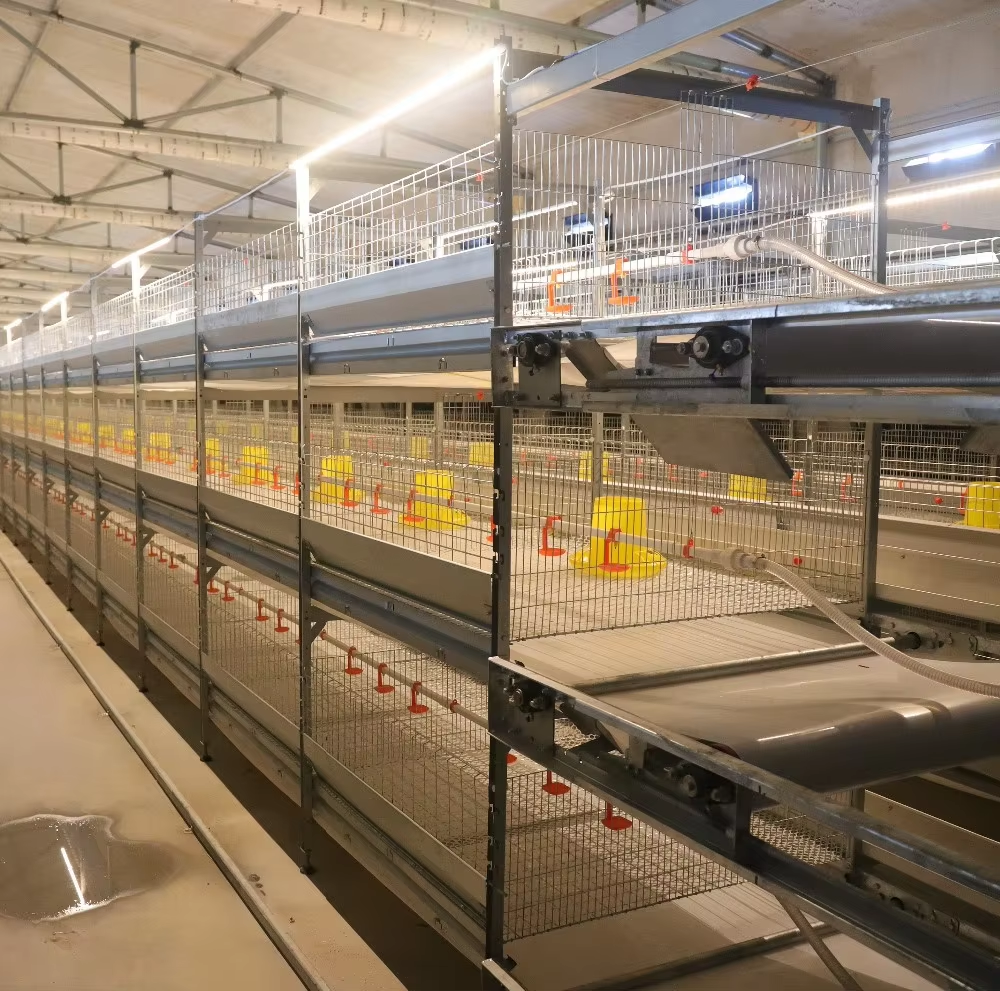
How Standardized Poultry Cage Design Meets International Export Requirements
Alignment of cage dimensions, ventilation, and food-grade materials with OIE, WTO-SPS, and ISO 22000 housing benchmarks
Standardized poultry cage systems align key physical and material specifications—cage width, depth, height, ventilation opening ratios, and surface composition—with internationally recognized benchmarks from the World Organisation for Animal Health (OIE), the World Trade Organization’s Sanitary and Phytosanitary (WTO-SPS) Agreement, and ISO 22000. Uniform dimensions reduce stocking density errors and accelerate official inspections. Ventilation design follows OIE guidance on ammonia thresholds (<25 ppm), relative humidity (50–70%), and ambient temperature control—critical for respiratory health and pathogen suppression. Food-grade galvanized steel frames and high-density polymer flooring meet ISO 22000 requirements for corrosion resistance, cleanability, and non-toxicity in food-contact environments.
This alignment delivers a clear, auditable SPS position: inspectors can verify slat spacing, air velocity, material certifications, and structural integrity against a single, pre-established baseline. Border officials gain confidence in rapid conformity assessments—reducing delays, re-inspections, and documentation disputes. Standardized layouts also improve loading/unloading ergonomics, lowering bruising, fecal contamination, and stress-related immunosuppression. Crucially, compliance becomes repeatable—not dependent on individual farm interpretation—but anchored in verifiable design evidence. For export managers, this standardization is the foundational step toward regulatory readiness before birds leave the farm.
EU import rejection case study: 42% reduction after implementing certified poultry cage systems (FAO 2022–2023)
A multi-country FAO review (2022–2023) tracked EU poultry import rejections before and after adoption of certified cage systems—and found a 42% decline in rejections between 2022 and 2023. The improvement stemmed primarily from enhanced hygiene consistency, stronger traceability, and streamlined sanitary verification. Certified cages use smooth, non-porous, food-grade surfaces that inhibit biofilm formation and pest harborage. Integrated manure belts and standardized access points minimized cross-contamination during flock turnover and transport. Inspectors reported fewer failures related to structural integrity, excessive stocking, or environmental hygiene—key triggers under EU Regulation (EC) No 853/2004.
The FAO data confirm that technical alignment translates directly into trade outcomes: exporters using standardized systems reduced container returns, cut re-inspection time by up to 60%, and strengthened buyer trust. While installation quality, staff training, and routine maintenance remain essential, standardization provides the structural foundation for sustained compliance—making it scalable across new market entries.
Poultry Cage Integration with Biosecurity and Sanitary Protocols
Automated cleaning, waste containment, and zoned access—how standardized poultry cage systems enforce SPS compliance
Standardized poultry cage layouts embed biosecurity into infrastructure—not just procedure—turning SPS compliance into a measurable, repeatable, and zone-specific function. Three integrated features deliver this:
Automated cleaning leverages timed sanitation cycles, washable cage surfaces, and continuous manure belts to remove organic load without manual intervention. A validated five-phase cleaning protocol—including dry removal, detergent soak, high-pressure rinse, disinfection, and drying—achieves ≥99.9% pathogen reduction between flocks.
Waste containment channels feces, feathers, and dust into sealed dropping boards and enclosed collection systems. This prevents vertical and horizontal cross-contamination, lowers ambient pathogen load near feed, water, and eggs, and reduces airborne particulate exposure.
Zoned access establishes unambiguous clean/dirty boundaries within each cage row—supported by footbaths, dedicated farm clothing lockers, and vehicle disinfection stations at entry points. Peer-reviewed field data show such zoning reduces cross-contamination risk by 38% compared with unstructured access (Poultry Health Journal, 2023).
Together, these features transform each cage module into a self-contained sanitary barrier. Workers service birds without traversing manure zones; equipment moves along defined service corridors; and downtime sanitation becomes faster, safer, and easier to audit. Export inspectors can review cleaning logs, access records, and waste-removal schedules per cage block—producing a documented, verifiable sanitation trail—not just subjective visual assessment. For exporters, this structural enforcement meets the evidentiary expectations of WTO-SPS and national import authorities.
Animal Welfare Certification Embedded in Poultry Cage Standards
Stocking density, perch provision, and litter compatibility mapped to EFSA, USDA-FSIS, and Global Animal Partnership (GAP) criteria
Export-oriented poultry cage standards convert animal welfare science into measurable, auditable design parameters. Stocking density is foundational: EFSA links floor space below 750 cm² per hen to elevated fear responses, feather pecking, and keel bone fractures—making minimum usable area a non-negotiable metric in EU furnished cage regulations. Perch provision supports musculoskeletal development and offers behavioral refuge; Global Animal Partnership (GAP) treats perching space as a core welfare requirement—not optional enrichment—with specific criteria for height, diameter, and accessibility. Litter compatibility enables natural behaviors like dust-bathing and foraging, which EFSA and GAP assess as positive welfare indicators; loose substrate must be maintained at consistent depth (≥5 cm) and moisture content to remain functional.
USDA-FSIS import checks may emphasize sanitation and recordkeeping, but welfare certification hinges on these three interdependent features. A cage may pass biosecurity audits yet fail EFSA or GAP verification if perch placement obstructs movement, slat spacing restricts litter access, or stocking density exceeds verified usable area. Export producers therefore engage third-party auditors before shipment to validate that cage geometry, perch configuration, and litter management collectively satisfy both regulatory and retailer-specific welfare benchmarks—ensuring certification readiness at the source.
Food Safety Outcomes Driven by Standardized Poultry Cage Implementation
31% lower Salmonella and Campylobacter prevalence in export-certified flocks using validated poultry cage protocols (WHO 2023)
Standardized poultry cage systems reduce foodborne pathogen risk at its origin. Controlled manure removal, elevated slatted floors, and automated egg collection minimize direct contact between birds and excreta—disrupting key transmission routes for Salmonella and Campylobacter. In export-certified flocks following WHO-validated cage protocols, prevalence of these two leading causes of foodborne illness dropped by 31% (World Health Organization, 2023). Lower bird-to-bird contact and reduced stress further support immune competence, while protected feed and water lines stay cleaner when defecation into shared troughs is physically prevented.
Environmental swabbing across certified farms shows significantly fewer positives in barns, egg belts, and transport crates—translating to less contaminated stock arriving at processing plants. This reduces cross-contamination risk in final products and strengthens compliance with Codex Alimentarius hygiene principles. As major importers increasingly require on-farm pathogen control data—not just end-product testing—standardized cages provide auditable, real-time metrics: manure removal frequency, slat gap measurements, and cleaning cycle adherence. Facilities lacking such controls face slower border clearance, higher sampling rates, and recurring testing costs. Consistent, validated cage implementation thus delivers measurable food safety outcomes—and safeguards long-term market access.
Frequently Asked Questions
What are the benefits of standardized poultry cage design?
Standardized poultry cage designs align with international export requirements, enhance animal welfare, improve biosecurity, and significantly reduce foodborne pathogen risks, ultimately facilitating global trade and market access.
How do standardized cages impact food safety?
Standardized cages minimize bird-to-bird contact, control manure removal, and optimize hygiene, reducing the prevalence of foodborne pathogens like Salmonella and Campylobacter by 31% (WHO 2023).
Which guidelines influence poultry cage standards?
Standards take inspiration from benchmarks set by the OIE, WTO-SPS Agreement, ISO 22000, EFSA, USDA-FSIS, and Global Animal Partnership (GAP), focusing on biosecurity, sanitation, and animal welfare.
How does zoning improve biosecurity in poultry cages?
Zoning enforces clean and dirty boundaries, enhancing biosecurity by limiting cross-contamination through measures like footbaths, vehicle disinfection stations, and designated clothing protocols.
What benefits do exporters gain from using certified poultry cage systems?
Exporters experience reduced import rejections, faster border inspections, and increased buyer confidence thanks to standardized cages, alongside improved hygiene, compliance, and operational efficiency.
Table of Contents
- How Standardized Poultry Cage Design Meets International Export Requirements
- Poultry Cage Integration with Biosecurity and Sanitary Protocols
- Animal Welfare Certification Embedded in Poultry Cage Standards
- Food Safety Outcomes Driven by Standardized Poultry Cage Implementation
- Frequently Asked Questions