
 EN
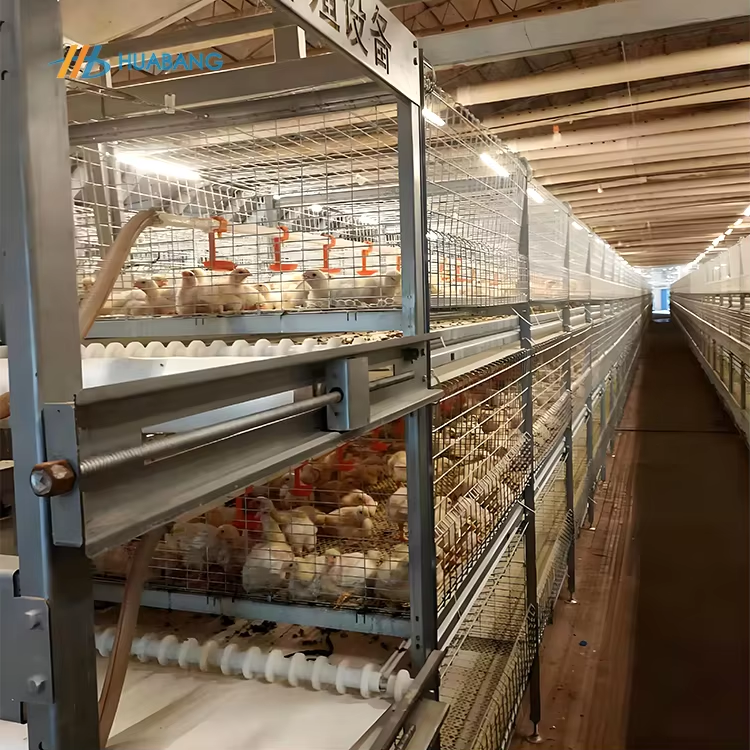
Core Selection Criteria for High-Performance Layer Chicken Cage Systems
Space Efficiency and Bird Welfare: Minimum 1.5 sq ft per hen with optimized vertical stacking
Optimal space allocation is foundational to flock health and productivity in layer chicken cage systems. Industry standards—including the U.S. Poultry & Egg Association’s Animal Care Guidelines and the European Union’s Council Directive 1999/74/EC—recognize 1.5 square feet per hen as the minimum welfare-compliant threshold for commercial egg production. Chronic overcrowding triggers elevated corticosterone levels, suppressing immunity and reducing annual egg output by up to 5% per bird. Well-engineered vertical stacking—such as A-frame or H-frame battery configurations—increases housing capacity three- to fourfold over single-tier floor systems without compromising individual space. This is achieved through precise tier spacing, appropriate cage depth, and integrated feeder/waterer placement. Critically, verticality must be designed-in from the outset; retrofitting cages into existing structures often undermines airflow, accessibility, and welfare outcomes.
Ventilation and Microclimate Control: Ensuring uniform airflow and heat dissipation in dense layouts
In high-density, vertically stacked layer chicken cage systems, microclimate management is non-negotiable. Metabolic heat from thousands of birds creates steep thermal gradients—upper tiers can exceed safe thresholds within minutes without engineered mitigation. Target airspeeds of 400–600 feet per minute across all levels are essential to remove moisture, ammonia, and excess heat while maintaining an effective temperature within the hen’s thermoneutral zone (65–75°F). Achieving this requires coordinated tunnel ventilation, ceiling-mounted circulation fans, and cage architecture that supports airflow—not hinders it. Cages with wide-mesh partitions, minimal structural obstructions, and open-bottom designs prevent dead-air zones where pathogens and gases accumulate. When cage design and building ventilation operate synergistically, hens sustain consistent feed conversion, shell quality, and immune resilience.
Material Durability: Hot-dip galvanized steel vs. HDPE — corrosion resistance, lifespan, and ROI analysis
Material choice directly determines long-term system reliability in the corrosive poultry barn environment—where ammonia, organic acids, and high humidity accelerate degradation. Hot-dip galvanized steel (coated to ≥275 g/m²) delivers high structural rigidity and a typical service life of 15–20 years, provided galvanization occurs after welding to protect vulnerable joints. In contrast, HDPE components are chemically inert, rust-proof, and resistant to aggressive cleaning agents across a broad pH range. Though initial HDPE investment may run 20–30% higher than standard galvanized steel, its lifecycle cost is often lower: leading manufacturers now offer 20+ year warranties on HDPE frames and trays, eliminating recurring rust repairs and unplanned part replacements. For operators prioritizing uptime, labor efficiency, and long-term asset value, HDPE increasingly represents the optimal balance of durability, hygiene, and total cost of ownership.
Operational Reliability: Maintenance Accessibility and Farm-Scale Serviceability
Effective servicing of a layer chicken cage system directly influences egg production continuity. Designs that prioritize rapid, ergonomic access to critical components minimize downtime during cleaning, inspection, and repair—supporting both biosecurity compliance and workforce safety.
Walk-through frames, multi-point access doors, and modular tray removal for rapid cleaning and repair
Walk-through frames enable staff to move upright between rows—eliminating crouching, crawling, or ladder use during routine checks. Strategically spaced multi-point access doors provide immediate entry to birds, feed lines, and drinker systems, cutting repair time by more than half compared to solid-panel enclosures. Modular manure tray systems allow individual trays to be slid out without disturbing adjacent cages or infrastructure. According to the Poultry Housing Efficiency Report 2023, farms using pull-out tray designs reduced full sanitation turnaround time by 40%. These features collectively reduce musculoskeletal injury risk, lower workforce turnover, and extend equipment life—while enabling proactive maintenance, such as early detection of belt wear, drinker misalignment, or egg track obstructions.
Hygiene Integrity and Automation Compatibility in Modern Layer Chicken Cage Installations
Sanitation-first design: Non-porous surfaces, sloped floors, and seamless joints to prevent pathogen buildup
Biosecurity begins with physical design. Modern layer chicken cage systems adopt a sanitation-first philosophy—using non-porous, cleanable materials like food-grade HDPE or fully sealed galvanized steel to eliminate micro-crevices where Salmonella and E. coli can persist. Sloped cage floors (3–4%) actively channel liquid waste away from hens, keeping walking surfaces dry and inhibiting ammonia volatilization. Seamless panel joints and integrated troughs prevent feed dust and manure accumulation—critical in multi-tier systems where debris otherwise settles into hard-to-reach gaps. Together, these features ensure disinfectants contact all critical surfaces during depopulation, reduce water usage during cleaning, and uphold rigorous hygiene standards across production cycles.
Seamless automation integration: Egg collection, feed delivery, and manure removal systems engineered for layer chicken cage scalability
Automation must function as a unified, scalable ecosystem—not a set of bolt-on components. Leading layer chicken cage manufacturers engineer egg belts, feed hoppers, and manure scrapers to align precisely with cage geometry, enabling seamless expansion from tens of thousands to hundreds of thousands of birds without reconfiguration. Fully integrated systems routinely deliver over 60% labor reduction while sustaining consistent hygiene and operational reliability.
| Automation Component | Scalability Feature |
|---|---|
| Egg collection | Gentle-slope mesh belts with variable-speed drives to match production peaks across tiers |
| Feed delivery | Volumetric hoppers and cross-augers that distribute feed uniformly regardless of line length |
| Manure removal | Modular scraper blades and timed belt systems that prevent bridging in high-density configurations |
FAQ
Why is 1.5 sq ft per hen considered the minimum threshold for welfare compliance?
It aligns with industry standards like the U.S. Poultry & Egg Association’s guidelines and helps prevent overcrowding, which can trigger health issues and reduce egg production.
What ventilations systems are best for vertically stacked cages?
Tunnel ventilation systems combined with ceiling-mounted circulation fans ensure uniform airflow and effective removal of heat, moisture, and gases.
How do HDPE and galvanized steel compare in terms of durability?
HDPE is more chemically resistant and rust-proof, offering lower lifecycle costs despite higher initial investment. Galvanized steel provides structural rigidity but requires regular maintenance.
How does automation improve productivity in layer chicken cages?
Integrated automation systems streamline egg collection, feed delivery, and manure removal, reducing labor by over 60% while maintaining hygiene and operational reliability.
What features lower maintenance time in cage systems?
Walk-through frames, modular manure trays, and multi-point access doors significantly reduce cleaning and repair times, minimizing downtime.
Table of Contents
-
Core Selection Criteria for High-Performance Layer Chicken Cage Systems
- Space Efficiency and Bird Welfare: Minimum 1.5 sq ft per hen with optimized vertical stacking
- Ventilation and Microclimate Control: Ensuring uniform airflow and heat dissipation in dense layouts
- Material Durability: Hot-dip galvanized steel vs. HDPE — corrosion resistance, lifespan, and ROI analysis
- Operational Reliability: Maintenance Accessibility and Farm-Scale Serviceability
- Hygiene Integrity and Automation Compatibility in Modern Layer Chicken Cage Installations
-
FAQ
- Why is 1.5 sq ft per hen considered the minimum threshold for welfare compliance?
- What ventilations systems are best for vertically stacked cages?
- How do HDPE and galvanized steel compare in terms of durability?
- How does automation improve productivity in layer chicken cages?
- What features lower maintenance time in cage systems?