
 EN
EN
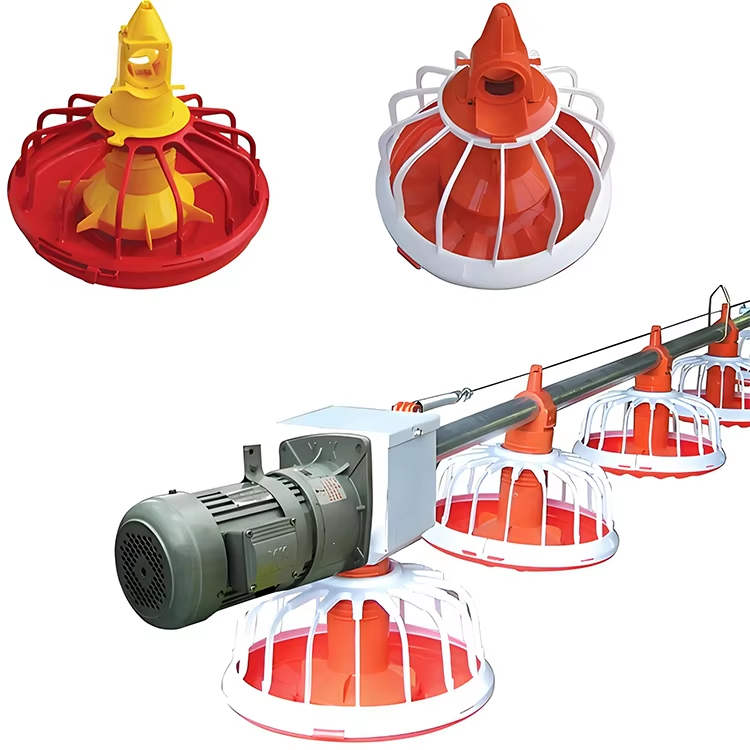
Labor Savings and Operational Scalability with Automatic Poultry Feeders
Labor efficiency is a primary driver for adopting an automatic poultry feeder—especially in expanding operations where manual tasks become a bottleneck.
Reduction in Daily Manual Feeding Labor Hours
Manual feeding requires workers to scoop, carry, and scatter feed multiple times per day—a repetitive, time-intensive process. Automatic feeders eliminate these steps by dispensing precise portions on a programmable schedule. According to a 2023 study in the Poultry Management Journal, farms using automated feeders save an average of 12.7 labor hours per week for every 500 birds—roughly 2–3 hours daily redirected toward higher-value activities like health monitoring and biosecurity checks. With consistent, scheduled delivery, staff can respond faster to early disease signs or equipment issues, improving flock management. The system also reduces physical strain on workers, supporting a safer, more sustainable work environment. By removing guesswork from feeding routines, operations scale bird numbers without proportional increases in manual labor.
Lower Labor Costs Across Mid- to Large-Scale Poultry Operations
These labor-hour reductions directly lower payroll expenses—a critical advantage for mid- to large-scale farms. Automation can save approximately $18,400 annually in labor costs for a mid-sized facility (Poultry Management Journal, 2023). A documented case from a Maryland poultry operation illustrates this: after installing automated feeders, daily feeding time dropped from 3.5 hours to just 25 minutes, yielding a 42% labor cost reduction within six months. Savings extend beyond reduced hours to include minimized overtime and error correction. Streamlined workflows also improve workforce stability—AgriTech Analytics (2023) found that farms using scheduled automated feeders experienced 23% lower employee turnover, attributed to less physical demand and predictable routines. As operations grow, automatic feeding systems maintain output without requiring additional hires—making scalability financially accessible and reinforcing a leaner, more resilient labor model.
Feed Efficiency Gains and Waste Reduction via Automatic Poultry Feeders
Precision Dispensing Minimizes Spillage and Optimizes Feed Conversion
Precision feeding technology directly addresses feed—the largest variable cost in poultry production. Manual feeding often leads to uneven distribution, overfilling, and spillage, wasting up to 10% of feed (Clark AG Systems, 2025). Automated systems dispense exact amounts on a timed schedule, virtually eliminating overfeeding. A Poultry Science (2023) study found farms using automated feeders cut feed waste by up to 25%. This precision optimizes feed conversion ratio (FCR)—the key metric for how efficiently birds convert feed into body mass. Better FCR means less feed per kilogram of weight gain, lowering operating costs. Real-time consumption sensors allow dynamic adjustments, preventing both underfeeding and nutrient gaps. The result is a leaner, more sustainable operation where inputs translate reliably into output—without the hidden loss of scattered or spoiled feed.
Consistent Distribution Across Flock Sizes and Housing Systems
Uniform feed distribution is essential for flock uniformity, health, and performance. Whether auger-based or pan-type, automated systems ensure every bird—from small colony cages to large floor systems—receives the same portion at the same time. This consistency reduces stress and aggression caused by competition at troughs, a common issue in manual feeding. In layer operations, steady access improves egg production and quality; for broilers, synchronized feeding promotes even growth rates and fewer underweight birds at processing. Systems are calibrated to adapt to varying flock sizes and housing layouts without manual recalibration—ensuring nutritional programs are delivered uniformly across batches. This adaptability reinforces precision dispensing, creating a closed loop of waste reduction and efficiency improvement that scales reliably with farm size.
Enhanced Bird Health, Welfare, and Production Outcomes
Stable Feeding Schedules Improve Feed Conversion Ratio (FCR)
Irregular meal timing in manual systems triggers cortisol spikes and competitive pecking—disrupting digestion and nutrient uptake. An automatic poultry feeder eliminates variability by delivering precise portions at consistent intervals aligned with the flock’s circadian rhythm. Research shows stable schedules reduce stress-induced energy waste and support uniform gut function, directly improving FCR. A 2021 study in the Journal of Applied Poultry Research reported a 3.7% FCR improvement in broilers fed automatically versus hand-fed cohorts. This gain stems from eliminating both binge eating and prolonged fasting—conditions that impair metabolic efficiency. Smoother intake patterns allow birds to allocate more dietary energy toward growth and maintenance rather than stress recovery, maximizing feed utilization.
Reduced Mortality and Increased Egg Yield in Layer Operations
Unpredictable feeding in layer barns—especially cage-free environments—fuels aggression, feather pecking, and trampling, as dominant birds monopolize feed. Automated systems distribute feed evenly across multiple points at scheduled times, reducing competition and enabling all hens to eat calmly. A 2022 field study by a global layer genetics provider observed that switching to automatic feeders lowered mortality by 2.2% and increased hen-housed egg production by 4.1%. Fewer injuries and lower stress levels correlate with improved immune competence—chronic anxiety is a known immunosuppressant. Steady nutrient delivery supports consistent follicle development, raising both egg count and shell quality. Ultimately, the regimen preserves flock vitality, directly translating to more saleable eggs per hen over the production cycle.
FAQs
How do automatic poultry feeders reduce labor costs?
Automatic poultry feeders reduce labor costs by eliminating repetitive manual feeding tasks, allowing workers to focus on value-added activities. Savings also result from minimized overtime, errors, and lower employee turnover.
What is the impact of automated feeding on feed waste?
Automated feeding systems minimize feed waste by dispensing precise portions, reducing spillage and overfeeding. Studies have shown a reduction of up to 25% in feed waste for farms using these systems.
Do automatic poultry feeders improve bird health?
Yes, automated feeders improve bird health by providing consistent feeding schedules, reducing stress, and lowering competition at the trough. This leads to better FCR, reduced mortality, and increased egg yield.
Are automated feeders adaptable to different housing systems?
Yes, automated systems are designed to accommodate various flock sizes and housing systems, including colony cages and large floor setups, ensuring uniform distribution without additional manual recalibration.