
 EN
EN
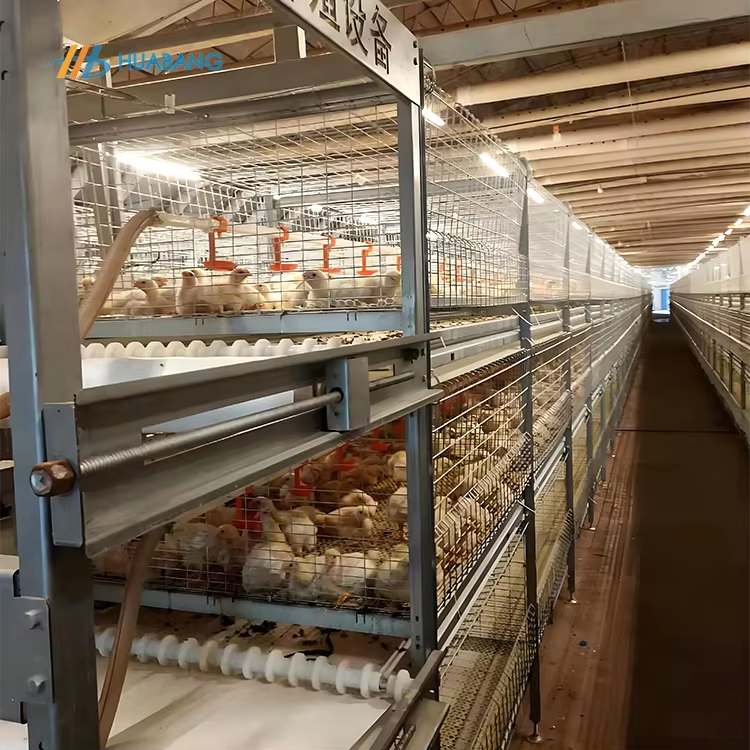
Chicken Cage Physiology and Temperature Requirements by Life Stage
Critical thermal thresholds for chicks, pullets, and layers in stacked chicken cage systems
In stacked chicken cage systems, ambient temperature requirements vary significantly by life stage due to physiological development. Chicks lack mature thermoregulation and rely entirely on external heat sources; the brooding zone must start at 33–34 °C during week one and decrease by ~2 °C weekly until reaching ~20 °C by week five or six. Pullets and layers maintain a stable core body temperature of 41–42.2 °C and tolerate broader ambient ranges—but only when environmental gradients are controlled. In multi-tier configurations, natural convection creates vertical temperature stratification, with upper tiers often 3–5 °C warmer than lower ones. To prevent heat stress in top cages or chilling in bottom rows, temperature sensors must be placed at bird level on each tier—not just at room height—and linked to tier-specific climate controls.
Breed-specific cold tolerance and its impact on heating demand in commercial chicken cage operations
Cold tolerance is strongly influenced by breed-specific traits: feather density, body mass, metabolic rate, and surface-area-to-volume ratio. Heavy breeds—such as brown-egg layers (e.g., Hy-Line Brown, ISA Brown) and dual-purpose types—retain heat efficiently and remain productive down to 12–15 °C. In contrast, light-bodied breeds like White Leghorns exhibit stress below 18 °C, triggering increased maintenance energy use, reduced egg output, and higher feed conversion ratios. In cold climates, housing light breeds in uninsulated or semi-insulated chicken cage houses can raise heating demand by up to 30% compared to heavy breeds. Selecting cold-tolerant genetics isn’t just an animal welfare decision—it directly lowers operational energy costs and simplifies thermal management across large-scale, automated cage systems.
Heating Technology Selection for Optimal Chicken Cage Performance
Radiant panels vs. heat lamps: safety, uniformity, and energy efficiency in multi-tier chicken cage layouts
Radiant panels outperform traditional heat lamps in safety, thermal uniformity, and long-term efficiency—especially in stacked cage systems. By emitting infrared energy that heats birds and surfaces directly (not air), radiant panels create consistent thermal zones across all tiers, eliminating the hot spots and cold corners common with directional, point-source heat lamps. Heat lamps also pose fire hazards near combustible dust and litter, disrupt circadian rhythms with visible light emission, and require frequent bulb replacement. Radiant panels consume 25–30% less electricity than equivalent heat lamps and deliver targeted warmth where birds need it most. A 2022 industry study found multi-tier operations using radiant panels reduced heating costs by $0.08 per bird per production cycle—translating to meaningful savings at scale. For modern, high-density chicken cage facilities, radiant heating supports both bird welfare and sustainable energy use.
Brooder mats and zone-specific electric brooders: precision warming for starter zones in automated chicken cage lines
Brooder mats and zone-specific electric brooders enable precise, localized heating critical during the first two weeks post-hatch—the most thermally vulnerable phase in a chicken cage system. Brooder mats provide gentle, conductive warmth from below, mimicking maternal contact and minimizing energy loss to ambient air. Zone-specific electric brooders offer adjustable overhead infrared heat that can be directed to individual tiers or sections within an automated line. When paired with digital thermostats, both systems maintain setpoints within ±1°F—reducing early mortality and promoting uniform chick development. Integration with programmable controllers allows heat zones to shift dynamically as birds grow and move through the line, cutting energy use by up to 20% versus static heating strategies. Unlike open-flame or high-wattage lamp-based systems, these solutions eliminate ignition risks while delivering repeatable, low-maintenance thermal control across thousands of birds.
Integrating Heating Systems with Climate Control in Chicken Cage Facilities
Thermostat zoning, mounting clearances, and fire-safety compliance for stacked chicken cage housing
Effective climate control in stacked chicken cage housing depends on intelligent zoning—not blanket temperature settings. Because heat rises and airflow resistance varies by tier height, each level should operate under its own thermostat with independent setpoints. This prevents overheating top cages while leaving lower tiers underheated—a common cause of uneven growth and respiratory strain. Sensors and heaters must be mounted with minimum clearances: at least 0.5 meters from cage walls, feeders, water lines, and litter to ensure accurate readings and reduce fire risk from surface overheating. All heating equipment must be UL-listed and installed in accordance with NFPA 85 (Boiler and Combustion Systems Hazards Code) and local fire codes. Automatic shut-off switches, heat-resistant enclosures, and integrated smoke detection further mitigate hazards in high-dust, high-biomass environments.
Synergy between heating, ventilation, and humidity control to prevent respiratory stress in high-density chicken cage environments
Heating cannot function in isolation in a sealed chicken cage facility—its effectiveness hinges on seamless integration with ventilation and humidity management. Without coordinated control, heaters increase moisture retention, elevating ammonia levels and promoting pathogen proliferation. Minimum ventilation fans must cycle in tandem with heating cycles to exchange stale, humid air without causing rapid temperature drops. Humidistats should cap relative humidity at 70% to prevent litter caking, footpad dermatitis, and airborne bacterial load. This triad—heat, air exchange, and moisture control—creates a stable microclimate: warm enough to support metabolism, dry enough to inhibit pathogens, and well-oxygenated to sustain high feed conversion. Farms implementing integrated climate control report up to 15% lower mortality and improved uniformity compared to those managing heating, ventilation, and humidity as separate functions.
Frequently Asked Questions (FAQ)
What is the ideal temperature for chicks in stacked chicken cage systems?
The temperature should start at 33–34 °C during the first week and decrease by approximately 2 °C weekly until reaching around 20 °C by week five or six.
How does breed-specific cold tolerance affect heating demand?
Heavy breeds like Hy-Line Brown and ISA Brown are productive down to 12–15 °C, requiring less heating. Lighter breeds like White Leghorns need higher temperatures, increasing heating demand by up to 30% in cold climates.
Why are radiant panels better than heat lamps in multi-tier cage systems?
Radiant panels provide safer, more uniform heat, consume 25–30% less electricity, and eliminate hot spots and cold corners compared to heat lamps.
What role do brooder mats play in chick development?
Brooder mats provide conductive warmth from below, replicating maternal contact and ensuring precise heating during the first two weeks post-hatch.
How can climate control systems improve chicken welfare in stacked cage environments?
Integrated systems combining heating, ventilation, and humidity control create stable, pathogen-free microclimates, reducing ammonia levels and preventing respiratory stress.
Table of Contents
- Chicken Cage Physiology and Temperature Requirements by Life Stage
- Heating Technology Selection for Optimal Chicken Cage Performance
- Integrating Heating Systems with Climate Control in Chicken Cage Facilities
-
Frequently Asked Questions (FAQ)
- What is the ideal temperature for chicks in stacked chicken cage systems?
- How does breed-specific cold tolerance affect heating demand?
- Why are radiant panels better than heat lamps in multi-tier cage systems?
- What role do brooder mats play in chick development?
- How can climate control systems improve chicken welfare in stacked cage environments?