
 EN
EN
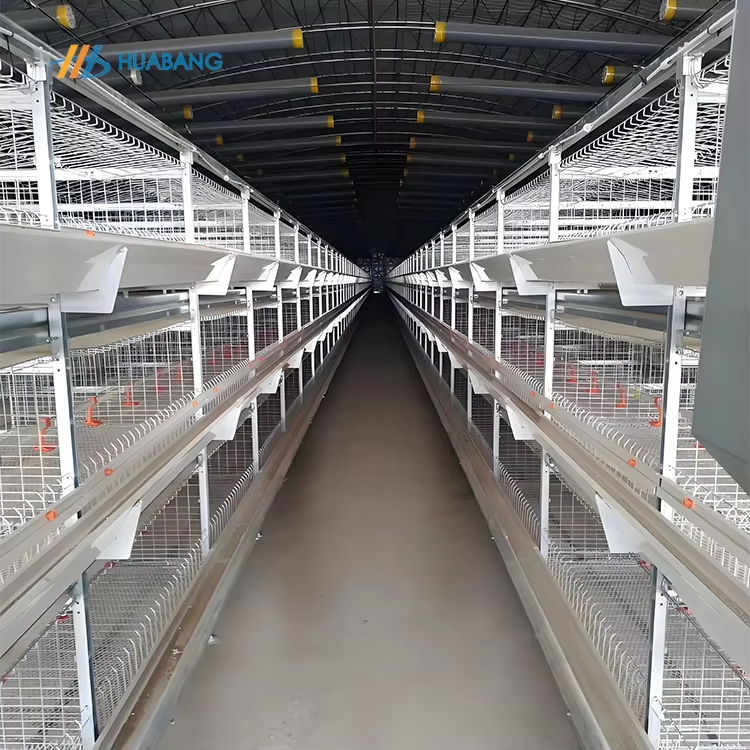
Superior Corrosion Resistance: The Primary Reason Hot-Dip Galvanized Chicken Cages Last Decades
Zinc’s Electrochemical Protection in High-Humidity, Ammonia-Rich Poultry Environments
The exceptional longevity of hot-dip galvanized chicken cages begins with zinc’s electrochemical behavior. In poultry houses—where humidity regularly exceeds 70% and ammonia concentrations often surpass 25 parts per million from decomposing waste—unprotected steel corrodes rapidly. Zinc delivers dual protection: first, as a physical barrier isolating steel from moisture and corrosive agents; second, and more critically, as a sacrificial anode. Because zinc is more electrochemically active than steel, it preferentially corrodes when both metals contact the same electrolyte—such as humid, ammonia-laden air—preserving the underlying steel even at scratches or cut edges. Independent testing in real-world poultry housing environments found hot-dip galvanizing reduced corrosion by 94% compared to untreated steel (2023 Material Durability Study). This electrochemical shield is the foundational reason these cages resist structural degradation despite relentless exposure to aggressive waste compounds.
Self-Healing Zinc Carbonate Layer Formation Under Tropical and Humid Conditions
Over time, the zinc coating evolves into an even more resilient defense. As zinc oxidizes, it reacts with atmospheric moisture and carbon dioxide to form a dense, insoluble, and tightly adherent patina—zinc carbonate (Zn₅(OH)₆(CO₃)₂). This passivation process is especially effective in warm, humid climates, where corrosion risk peaks. Unlike red rust—which flakes away and exposes fresh steel—the zinc carbonate layer remains intact and chemically inert. Crucially, it exhibits self-healing properties: if scratched deeply enough to expose bare metal, surrounding zinc sacrifices itself and its corrosion products migrate to seal the breach. This dynamic repair mechanism is vital for chicken cages subjected to daily abrasion from birds, feeders, and cleaning tools—and explains why hot-dip galvanized units maintain surface integrity and structural soundness across decades of use in commercial operations.
Robust Hot-Dip Galvanizing Process: How Coating Thickness and Uniformity Ensure Long-Term Chicken Cage Integrity
The hot-dip process creates a metallurgical bond between steel and zinc, forming intermetallic iron–zinc alloy layers that resist flaking and corrosion far longer than paint or electroplated coatings. This deep integration is essential: wire cages must endure constant pecking, manure moisture, and mechanical stress without exposing bare steel.
Industry-standard 275 g/m² zinc coating and its proven correlation with 20+ year service life
A minimum coating weight of 275 g/m²—within the widely accepted 200–300 g/m² range—is the industry benchmark for commercial poultry equipment. At this thickness, the zinc barrier fully blocks oxygen and moisture penetration, even in ammonia-saturated air. Field data from large-scale operations confirm cages built to this standard remain structurally sound and virtually rust-free for two decades or more. In contrast, electro-galvanized mesh (15–25 g/m²) frequently develops red rust at welds within two years, triggering premature replacement. The extra zinc mass directly extends service life—each gram represents measurable resistance against downtime and rebuild cycles.
Full coverage of welds, corners, and complex geometries—critical for structural longevity of chicken cages
Rust almost always initiates at structural weak points: wire intersections, cage-leg joints, and crevices around feeders and doors. Hot-dip galvanizing immerses the entire fabricated cage frame in molten zinc (~450 °C), allowing the coating to flow into every recess and fuse across every weld. The result is a continuous, uniform layer—no thin spots, no bare edges. Unlike spray or brush-on coatings, this bath process seals internal surfaces of bent-wire components, where hidden corrosion commonly begins. Complete encapsulation of high-stress zones ensures long-term structural stability—even under heavy bird loads and repeated vibration from daily cleaning.
Hot-Dip vs. Cold Galvanizing: Why Only Hot-Dip Delivers True Longevity for Commercial Chicken Cages
Adhesion, thickness, and corrosion resistance comparison—why cold galvanizing fails prematurely in poultry farms
The stark difference in service life between electro-galvanized (“cold”) and hot-dip galvanized cages stems from fundamental metallurgical differences. Cold galvanizing deposits only a thin, non-alloyed zinc layer (5–25 microns) via electroplating—a mechanical bond prone to flaking, scratching, and edge thinning. Hot-dip galvanizing, by contrast, immerses components in molten zinc, forming intermetallic zinc–iron alloy layers harder than the base steel and metallurgically fused to it.
| Feature | Cold Galvanized (Electro) | Hot‑Dip Galvanized |
|---|---|---|
| Adhesion | Surface‑level mechanical bond; prone to flaking | Deep metallurgical bond with steel substrate |
| Zinc Coating Mass | 15–25 g/m² (5–25 µm) | 200–300 g/m² (50–200 µm) |
| Weld & Edge Protection | Thin spots and bare steel at joints rust first | Complete encapsulation even over sharp edges |
| Corrosion Resistance in Poultry Shed | Rapid pitting when exposed to ammonia and moisture; 2–5‑year lifespan | Self‑healing zinc carbonate barrier; resistant to aggressive ammonia‑laden humidity |
Poultry sheds generate an alkaline electrolyte from ammonia and moisture—one that aggressively attacks unprotected steel. Cold-galvanized wire fails early at welds and scratches, while hot-dip’s thick, bonded coating forms a stable, self-repairing zinc carbonate film. Only hot-dip galvanizing sustains structural integrity for 20+ years under these harsh conditions.
Real-World Validation: Field Data and Lifecycle Cost Savings of Hot-Dip Galvanized Chicken Cages
Field data from commercial poultry operations consistently confirms hot-dip galvanized cages deliver 20+ years of service with minimal structural degradation. Cold-galvanized alternatives typically require three to four replacements over the same period—driving up capital costs, labor, and operational downtime. This translates into significantly lower total cost of ownership: the initial investment is amortized over decades rather than years, and maintenance labor drops sharply due to inherent rust resistance. The table below reflects actual usage patterns observed across multiple tropical and temperate operations.
| Cost Factor | Hot-Dip Galvanized Cages | Standard Cold Galvanized Cages |
|---|---|---|
| Replacement Frequency (20 years) | Zero replacements | Three to four replacements |
| Maintenance Labor | Low (rust‑resistant) | High (frequent repairs) |
| Total Equipment Cost | Single initial investment | Multiple re‑purchases |
| Estimated Resale Value (after 10 years) | High | Negligible (due to rust) |
These outcomes are validated by multi-year farm reports and independent assessments—including observations from tropical regions where the self-healing zinc carbonate layer preserves weld integrity and surface smoothness, facilitating efficient manure removal and biosecurity compliance. For producers focused on long-term profitability, hot-dip galvanized cages represent the only economically rational choice.
Frequently Asked Questions
Why are hot-dip galvanized chicken cages ideal for high-humidity environments?
Hot-dip galvanized cages use a zinc coating that acts as both a physical barrier and a sacrificial anode, preventing steel corrosion even in ammonia-rich and humid conditions.
What is the expected service life of hot-dip galvanized cages?
Hot-dip galvanized chicken cages typically deliver a service life of 20+ years with minimal maintenance, even in aggressive poultry shed conditions.
How does the zinc carbonate layer contribute to cage durability?
The zinc carbonate layer forms over time and provides self-healing properties. It seals scratches and exposed metal, maintaining structural integrity for decades.
How does hot-dip galvanizing compare with cold galvanizing?
Hot-dip galvanizing forms a thicker, bonded zinc coating resistant to flaking, corrosion, and wear, whereas cold galvanizing offers a thinner and less durable mechanical layer prone to early degradation.
Table of Contents
- Superior Corrosion Resistance: The Primary Reason Hot-Dip Galvanized Chicken Cages Last Decades
- Robust Hot-Dip Galvanizing Process: How Coating Thickness and Uniformity Ensure Long-Term Chicken Cage Integrity
- Hot-Dip vs. Cold Galvanizing: Why Only Hot-Dip Delivers True Longevity for Commercial Chicken Cages
- Real-World Validation: Field Data and Lifecycle Cost Savings of Hot-Dip Galvanized Chicken Cages
- Frequently Asked Questions