
 EN
EN
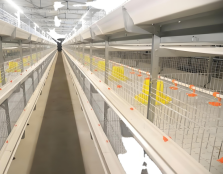
Understanding Feed Waste in Poultry Production
What constitutes feed waste in chicken feeding?
In operations lacking a chicken feeding line, waste occurs through three main channels: spillage during distribution (40% of losses), spoilage from environmental exposure, and selective feeding behaviors. Manual systems often lack consistent portion control, allowing feed to accumulate where chickens can easily scatter it outside designated areas.
Economic and environmental consequences of feed spillage
Around two thirds of what farmers spend on production goes toward buying feed, but roughly 10 to 15 percent just ends up going to waste in most conventional setups. Take a medium sized poultry operation for instance - they're losing around seven hundred forty thousand dollars every year because of spoiled or spilled feed according to the Poultry Efficiency Report from last year. The environmental impact is also serious business. When leftover feed rots away, it releases methane which packs about 23 times the warming punch of regular carbon dioxide. And don't forget all the water wasted growing those grains that never actually get eaten either - somewhere around 1,800 gallons disappears down the drain for each ton of lost feed. That's why smarter feeding solutions matter so much for preserving both money and our planet's precious resources.
Precision Feed Delivery: How Chicken Feeding Lines Minimize Waste
Controlled Dispensing and Automated Timing in Chicken Feeding Line Systems
Today's chicken feeding systems rely on programmable augers that can get feed out with around 2% accuracy, which is roughly 15 times better than what people could manage by hand according to the latest Poultry Efficiency Report from 2024. The way these machines work is pretty smart too. They actually wait until they sense a beak touching before dropping any feed down, and this simple trick cuts waste significantly. Field tests showed a reduction in spilled feed by about 41%, which makes a real difference over time. Another neat feature is how the timing matches up with chickens' natural eating habits. Most of their daily food gets delivered during daylight hours when they're most active at eating, accounting for approximately 78% of all the feed given throughout the day.
Adjustable Pan Heights and Feed Guard Mechanisms for Optimized Access
The best performing systems come equipped with feeding pans sloped at around 30 degrees and height adjustments so they can fit different sized birds without creating too much waste from constant scratching. These systems also include built in feed guards that serve as actual barriers stopping birds from knocking food out during their natural foraging behavior. According to recent research published in Poultry Science Insights last year, this simple addition cuts down on spilled feed by about two thirds. The whole setup makes sure all birds get proper access to their meals while maintaining trough levels low enough to prevent buildup problems that happen when feed sits there too long.
Balancing Accessibility and Waste Control in Modern Feeder Design
The most effective chicken feeding lines incorporate:
- Vibration settings calibrated to pellet size
- Infrared crowd detection to prevent overcrowding at stations
- Response times under five minutes to changing consumption patterns
A Nebraska farm study achieved 92% feed utilization using these features, compared to 82% in conventional setups.
Data-Driven Improvements: FCR Gains Through Optimized Feed Delivery
When automated systems track how much feed animals actually eat in real time, they can adjust feed delivery across five different growth phases. A poultry farm saw their Feed Conversion Ratio drop from 1.79 down to 1.58 over just six months, which means about 12% better efficiency and around $18k saved each year on every 10 thousand chickens according to AgTech Poultry research from last year. These days, machine learning algorithms are getting pretty good at spotting when feed demand will jump unexpectedly, hitting right about 89% accuracy mark most of the time. This helps cut down on wasted nutrients significantly while keeping costs under control for operations big and small.
Smart Technology Integration in Chicken Feeding Line Systems
Modern chicken feeding line systems integrate smart sensors and data analytics to address persistent feed management challenges, directly targeting the 23–28% waste rates still common in traditional poultry operations (FAO 2023).
Sensor-Based Monitoring for Real-Time Feed Management
Infrared sensors and load cells track consumption with 98.7% accuracy, enabling immediate correction of overfeeding. Table 1 compares waste reduction performance across sensor types:
| Sensor Technology | Waste Reduction | Implementation Cost |
|---|---|---|
| Infrared | 32% | $$ |
| Load Cell | 28% | $$ |
| Camera Vision | 41% | $$ |
Real-Time Adjustments Based on Flock Behavior
Machine learning algorithms analyze 37 behavioral indicators–including pecking frequency and feeder crowding–to estimate actual intake. Farmers receive automated alerts when behavior deviates from optimal baselines established through poultry nutrition research.
Matching Feed Flow Rates to Poultry Nutritional Demands
Phase-specific programming adjusts pellet size and distribution intervals:
- Starter phase: 2.3mm crumbles every 72 minutes
- Grower phase: 3.1mm pellets every 94 minutes
- Finisher phase: 4.0mm pellets every 113 minutes
This alignment with developmental needs minimizes excess and supports uniform growth.
Balancing Automation With Practical Farm Oversight
While smart systems achieve up to 18% improvements in FCR during trials, successful deployments include human oversight. Daily manual checks of 5–7% of feeders ensure system accuracy and adaptability–this hybrid model sustains 96% long-term waste reduction rates in broiler production studies.
Proven Results: Feed Efficiency Gains on Commercial Farms
Case Study: 18% Reduction in Feed Costs on a Commercial Broiler Farm
A 2024 industry analysis found that one Midwest broiler farm reduced feed costs by 18% within six months of installing a modern chicken feeding line. Real-time monitoring eliminated overfilling errors, while adjustable feed gates minimized spillage during peak feeding periods.
Measuring Performance: From Feed Conversion Ratio to Waste Metrics
Farmers assess success using two primary indicators:
- Feed Conversion Ratio (FCR): Automated systems improved FCR by 12% in layer flocks, meaning fewer inputs per egg produced
- Waste audits: Infrared sensors measure uneaten feed, with top farms reporting less than 2% spillage versus 8–15% in manual systems
Data from precision agriculture trials shows automated lines achieve 80–90% feed utilization, significantly outperforming the 60–70% range typical of traditional methods.
Long-Term Sustainability and ROI of Automatic Poultry Feeding Systems
The upfront cost typically falls somewhere between fifteen thousand and forty thousand dollars per housing unit, though many poultry farmers find they get their money back within just three years when looking at what they save on feed expenses. Take a typical setup with ten houses where someone manages to cut down eighteen tons of feed consumption each month at around three hundred bucks per ton. That adds up to roughly sixty-four thousand eight hundred dollars saved every year, money that goes toward upgrading facilities or adding solar panels and other green technologies. Plus, less waste means better chances at getting those important eco-labels such as Global Animal Partnership certification, something big grocery chains now expect from their suppliers these days.
FAQ
What is feed waste in poultry production?
Feed waste includes spillage during distribution, spoilage from exposure, and selective feeding behaviors, leading to significant economic and environmental consequences.
How do chicken feeding lines minimize feed waste?
They use controlled dispensing, automated timing, adjustable pans, feed guards, and data-driven adjustments to reduce spillage and optimize feed delivery.
What role does smart technology play in feed waste reduction?
Smart technology integrates sensors and data analytics for real-time monitoring and adjustments based on flock behavior, minimizing feed waste.
How can the Feed Conversion Ratio (FCR) be improved?
Automated systems improve FCR through precise feed delivery tailored to the birds' growth phases, reducing inputs per production unit.
What are the cost benefits of using automated poultry feeding systems?
While initial setup costs can be significant, these systems can recover expenses within three years through feed savings and improved sustainability.