
 EN
EN
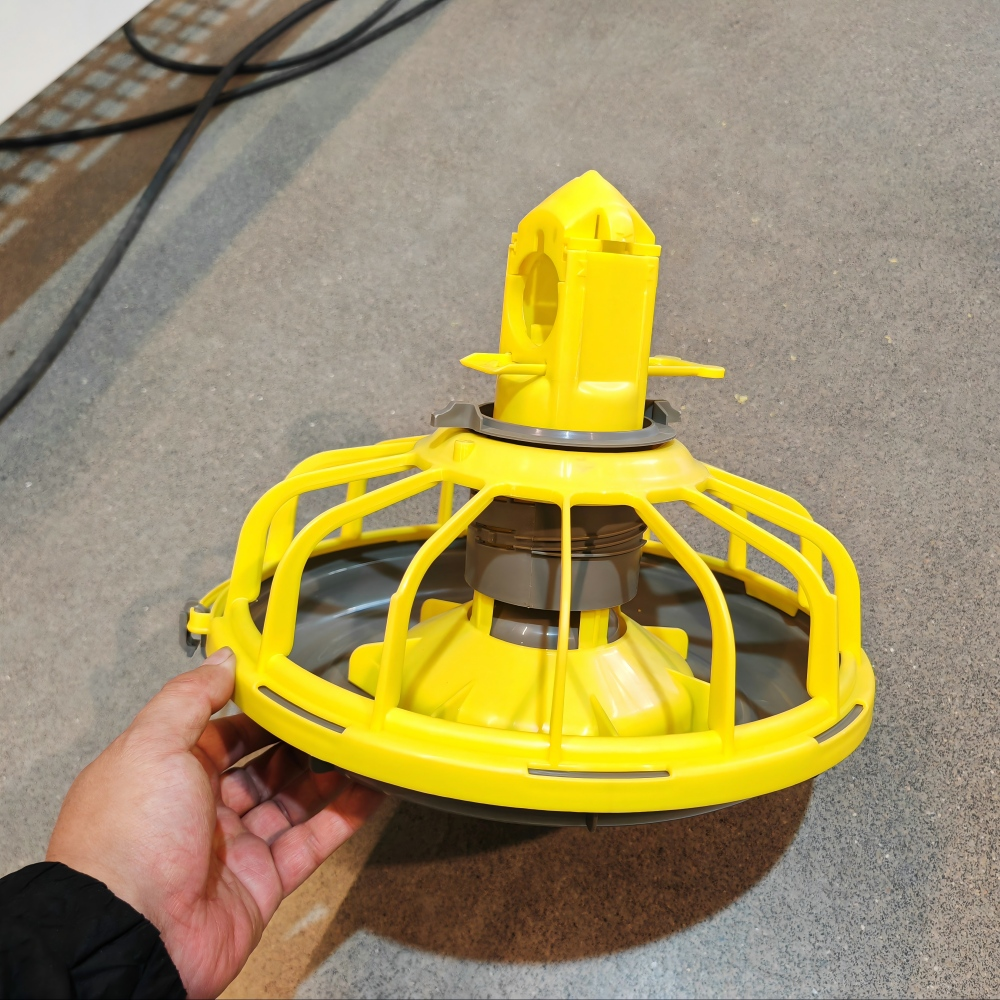
Improved Feed Efficiency and Waste Reduction
Precision distribution technology minimizing spillage and nutrient segregation
An integrated chicken feeding line uses precision distribution technology to deliver exact feed portions directly to each trough—eliminating overfeeding, a major cause of nutrient segregation and spillage. Advanced sensors and control modules adjust flow rates in real time, aligning feed output with actual bird consumption patterns. Unlike broad, uncontrolled distribution methods, this system prevents fines and micro-ingredients from separating during transport, ensuring every bird receives a nutritionally balanced ration without selective eating. It also minimizes feed scratched out or trampled—a leading source of waste in manual systems—keeping feed fresh and accessible to encourage consistent intake. The result is stable flock growth and measurably lower feed conversion ratios (FCR), with ROI accelerated by reduced feed costs and improved bird health.
Auger and chain-disk system design advantages for consistent feed delivery
Well-engineered auger and chain-disk conveyor systems form the backbone of reliable feed delivery in modern chicken feeding lines. Auger systems use a rotating helical screw inside a sealed tube to gently push feed forward, preserving pellet integrity and minimizing breakage. Chain-disk systems pull feed along troughs using evenly spaced discs on a continuous chain, maintaining a uniform layer across the entire line. Both designs prevent bridging and clumping—common causes of uneven distribution—and deliver feed at a steady, metered rate. This ensures equal access for all birds, regardless of position in the house, and preserves particle size and nutrient consistency from first to last feeder pan. The outcome is a repeatable, high-fidelity feeding process that supports consistent flock performance.
Proven waste reduction: 8–12% less feed loss vs. manual systems (FAO, 2023)
According to the Food and Agriculture Organization (FAO, 2023), automated feeding systems reduce feed loss by 8–12% compared to manual methods—driven by elimination of over-pouring, minimized transport spillage, and reduced contamination from litter or droppings. In a 20,000-bird house, a 10% saving translates to several tonnes of feed conserved per production cycle. These savings extend beyond volume: less spilled feed means fewer opportunities for mold development or pest infestation. Over successive flocks, the cumulative effect steadily lowers cost per kilogram of meat—making automation a direct lever for reducing poultry production’s largest variable expense.
Optimized Growth Performance and Flock Uniformity
Phase-specific feeding protocols enhancing ADG and lowering FCR
An integrated chicken feeding line functions as a precision nutrition platform—not just a delivery mechanism. Its ability to execute phase-specific feeding protocols automatically is central to its impact. By adjusting feed composition and volume in alignment with the flock’s age and developmental stage (starter, grower, finisher), the system meets precise nutritional demands at each life phase. This dynamic alignment boosts Average Daily Gain (ADG) while driving down Feed Conversion Ratio (FCR). Birds receiving optimally balanced, non-segregated rations channel more energy into muscle growth and less into metabolic compensation for dietary gaps—fully unlocking their genetic growth potential.
Reduced coefficient of variation (CV%)—from 12% to 7%—driving uniform market readiness
A defining advantage of automated feeding is the elimination of competitive feeding behavior. In manual systems, dominant birds monopolize feed access, leaving timid or weaker individuals underfed—widening weight dispersion. An integrated chicken feeding line provides simultaneous, unrestricted access across the entire house length, ensuring every bird consumes its targeted ration. This dramatically tightens weight distribution: industry data shows CV% can improve from ~12% under manual feeding to 7% or better with automation. Such uniformity delivers tangible economic value—processors reward flocks where a higher proportion of birds fall within the ideal weight window, reducing downgrades and increasing line efficiency at the plant.
Data-Driven Control Through Real-Time Monitoring
The shift from manual observation to automated intelligence transforms operational management in modern poultry production. Traditional visual checks are intermittent and reactive; a data-driven feeding line delivers continuous, actionable insights—enabling proactive, evidence-based decisions.
IoT-enabled level sensors and feed bin analytics for dynamic adjustments
IoT-enabled level sensors installed in feed bins and along the feeding line capture real-time data on feed levels, flow rates, and consumption patterns—transmitting it to a centralized analytics platform. This enables dynamic, demand-responsive adjustments rather than rigid, schedule-based feeding. For example, if sensors detect an abrupt drop in consumption in one zone, the system can instantly alert managers and pause delivery to that section—preventing waste while flagging potential issues like line blockages or early-stage health events. This responsive model shifts operations from fixed routines to needs-based management, reducing overall feed waste by 5–7% (2024 industry observation). The closed-loop feedback ensures the feeding line continuously adapts to actual flock requirements—not preset assumptions.
Labor Savings and Strong Economic ROI
60–70% reduction in daily feeding labor per 20,000-bird house
An integrated chicken feeding line automates poultry farming’s most labor-intensive daily task. In a standard 20,000-bird house, manual feeding typically requires 4–5 hours per day—lifting, hauling, and distributing feed bags, then checking and refilling troughs. Automation reduces this to just 1–1.5 hours, delivering a 60–70% labor reduction. Time previously spent on physical feed handling is redirected toward higher-value activities: flock health monitoring, environmental assessment, and interpreting feeding analytics. This not only lowers payroll costs but also mitigates operational risk tied to labor shortages and turnover.
14–18 month ROI driven by combined feed and labor savings (2024 Poultry ROI Benchmark)
The financial case for automation is both robust and rapid. Combining an average 10% reduction in feed waste with a 60–70% cut in daily labor yields strong dual-savings momentum. Per the 2024 Poultry ROI Benchmark, these synergies enable full capital recovery for a typical broiler operation within 14–18 months. After payback, ongoing savings accrue directly to net profit—converting the feeding line from a capital investment into a persistent value driver. This swift return, paired with measurable gains in feed efficiency, flock uniformity, and labor resilience, explains why integrated feeding systems are now a cornerstone of competitive, scalable poultry operations.
Frequently Asked Questions
How does precision distribution technology improve feed efficiency?
Precision distribution technology minimizes spillage and nutrient segregation by delivering exact feed portions, preventing fines from separating and ensuring each bird receives nutritionally balanced rations.
What are the benefits of auger and chain-disk systems?
Auger systems preserve pellet integrity by gently pushing feed forward, while chain-disk systems ensure uniform feed distribution. Both systems prevent feed clumping and bridging, leading to consistent delivery and minimizing waste.
How do automated feeding systems reduce feed loss?
Automated systems reduce feed loss by eliminating over-pouring, minimizing transport spillage, and preventing contamination from litter or droppings, resulting in a feed savings of 8–12% compared to manual systems.
What is the role of phase-specific feeding protocols?
These protocols adjust feed composition and volume based on the flock’s developmental stage, optimizing Average Daily Gain (ADG) while lowering Feed Conversion Ratio (FCR).
How does automation improve flock uniformity?
Automated feeding provides unrestricted access to feed for all birds, reducing competitive feeding behavior and narrowing weight variation, improving Coefficient of Variation (CV%).
What are the labor savings with automated feeding lines?
Automation cuts daily feeding labor by 60–70% in a 20,000-bird house, reducing the time spent on physical feed handling and allowing focus on other essential tasks.
What is the typical ROI timeframe for integrated feeding systems?
The average ROI timeframe is 14–18 months, driven by combined feed savings and labor reduction.
Table of Contents
- Improved Feed Efficiency and Waste Reduction
- Optimized Growth Performance and Flock Uniformity
- Data-Driven Control Through Real-Time Monitoring
- Labor Savings and Strong Economic ROI
-
Frequently Asked Questions
- How does precision distribution technology improve feed efficiency?
- What are the benefits of auger and chain-disk systems?
- How do automated feeding systems reduce feed loss?
- What is the role of phase-specific feeding protocols?
- How does automation improve flock uniformity?
- What are the labor savings with automated feeding lines?
- What is the typical ROI timeframe for integrated feeding systems?